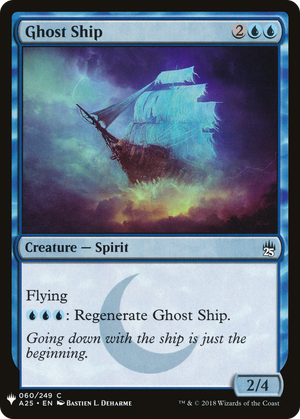
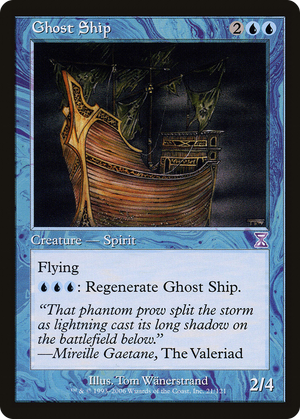
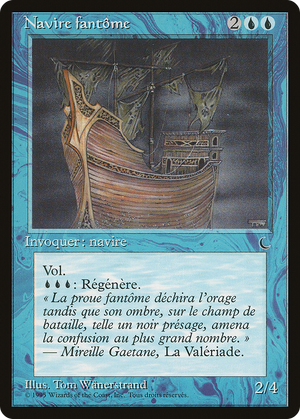
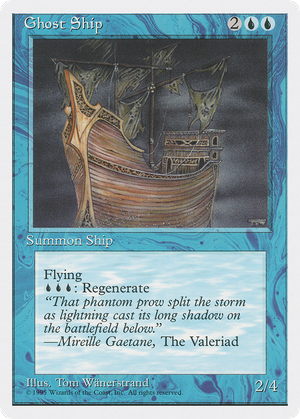
Ghost Ship


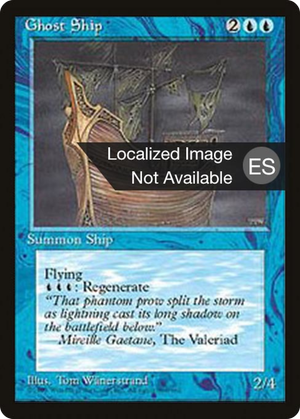
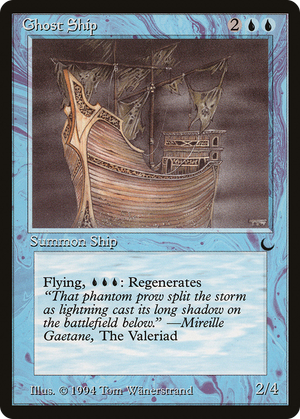
A flying wall that refuses to die: that is the whole design idea here, and it is a tidy snapshot of how early blue handled defense. The 2/4 body already blocks most of the ground and ducks under the era's burn, but the regeneration clause is what gives it teeth. The cost is steep and self-referential: three blue mana per shield, a tax heavy enough that the card cannot simply tank an entire game for free. That friction is the balancing valve. You pay through the nose to keep it alive, which means each combat where you save it is a real resource decision rather than an afterthought. The triple-blue activation also pins it firmly into mono-blue or near-mono-blue shells; this is not a splash creature, it is a commitment. This is blue from the period when the color's idea of inevitability was attrition through bodies that could not be removed, not the card-advantage engines and counterspell walls it would later be known for. A regenerating flier sits at the intersection of two defensive axes (evasion you can deploy on offense, durability you can deploy on defense), and the cost structure makes you choose which one you are paying for in any given turn. It is clean, honest work, the kind of unglamorous building block that quietly defined what blue could and could not do in its first years.
Rules text
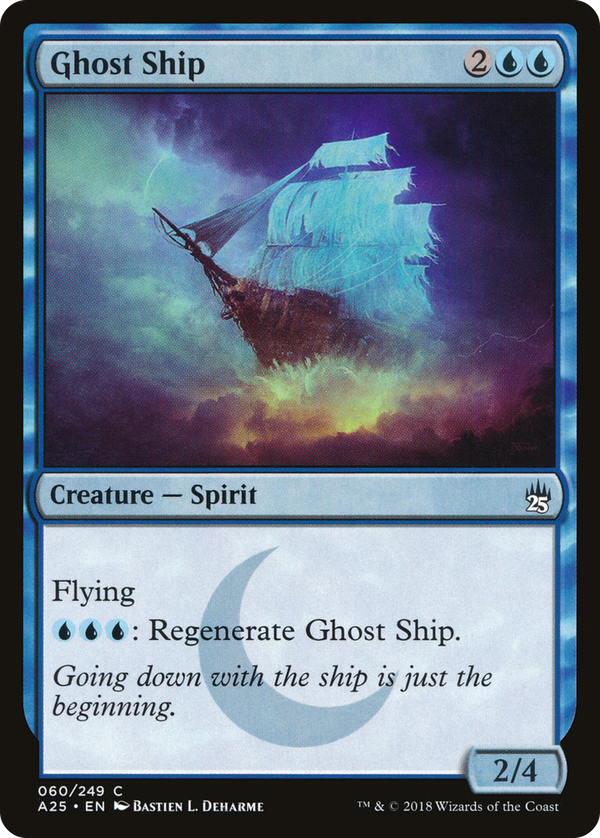
: Regenerate this creature.