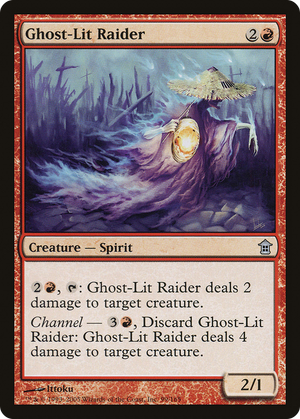
Ghost-Lit Raider


The body is a 2/1 that almost never wants to attack, and that is the point: it is a repeatable pinger dressed as a Spirit, parked behind the lines to shoot down anything with two toughness or less while staying back to do it again next turn. The Channel clause gives the card its second life. When the board state never resolves into a place where you want a fragile tapper, you discard it for a one-shot four-damage burn spell, turning a do-nothing draw into immediate creature removal. That is the design lesson of the Channel cycle from this era: a permanent that doubles as a spell when the permanent is the wrong card. The two halves are deliberately misaligned in efficiency. Tapping for two is the slow, attritional mode that grinds a creature deck down over several turns; the four-damage Channel is the panic button that costs you a card and the board presence but answers a real threat now. Neither mode is generous on rate, which is the constraint that keeps a creature this evasion-free and combat-shy from quietly running away with games. What it offers instead is a single card that is rarely dead: removal you can deploy as a body when you have time, or sacrifice as a spell when you do not.
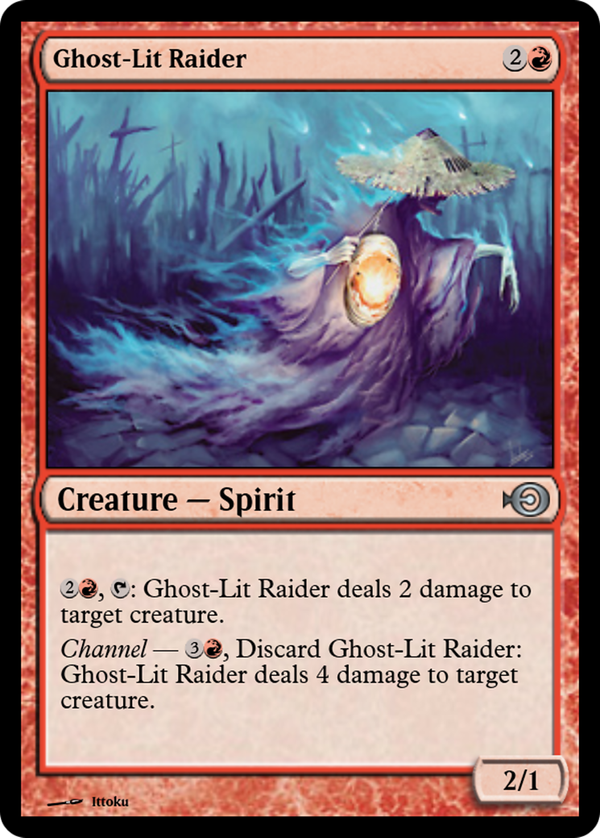
Rules text
,  : This creature deals 2 damage to target creature.
Channel —
: This creature deals 2 damage to target creature.
Channel —  , Discard this card: It deals 4 damage to target creature.