Genesis Wave


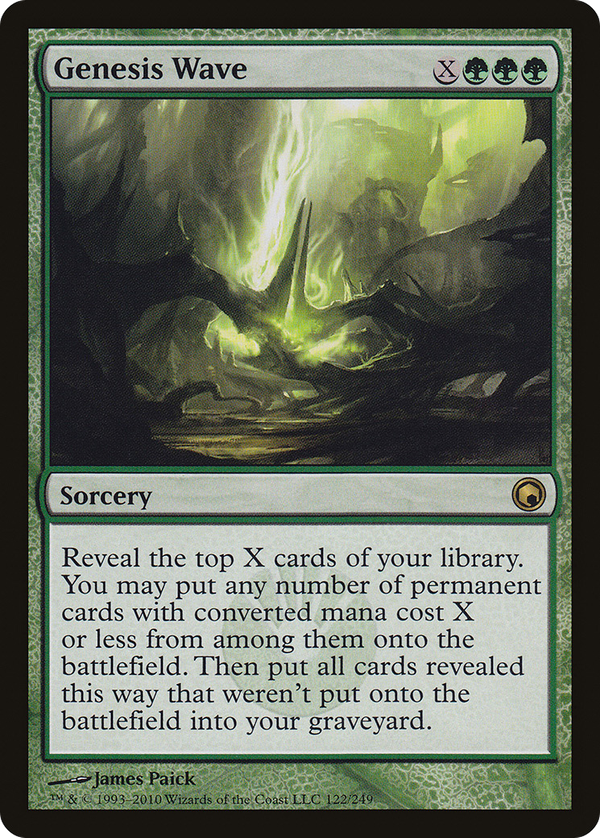
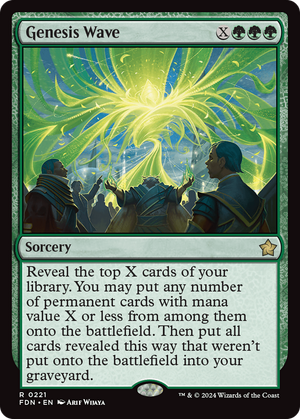
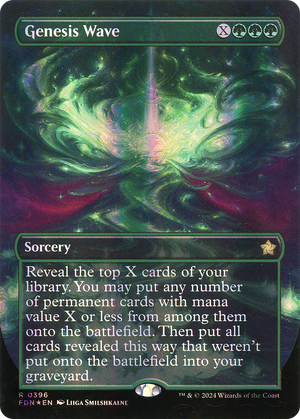
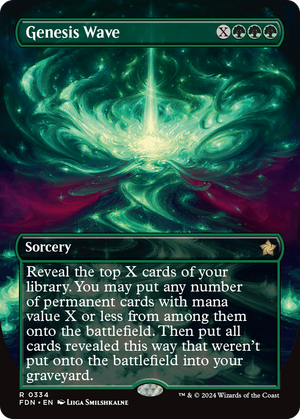
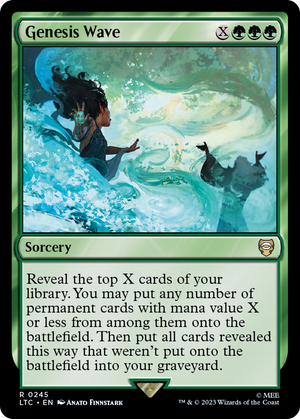
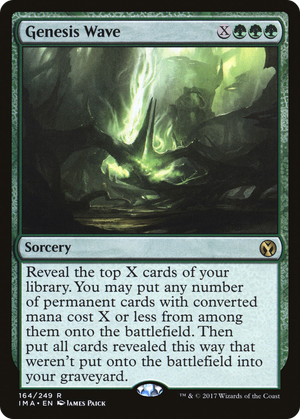
The double payload is the trick: the X in the cost and the X in the mana-value filter are the same number, so every point you sink both deepens the dig and raises the ceiling on what you can drop. Pay nine total and X is six, so you flip six cards and may deploy any permanent costing six or less; push X to ten and you reveal ten while the gate to enter the battlefield climbs right alongside the depth. That single-variable coupling is the engine: nothing about the spell lets the size of the reveal and the size of what may enter drift apart, so scaling one always scales the other. The catch is structural and severe. Anything revealed that is not a permanent of the right cost, or that you simply choose to leave behind, goes straight to the graveyard, so a deck running it cannot afford to draw instants and sorceries off the top without burning them. That tax points the spell squarely at decks stuffed with cheap permanents and ramp: creatures, enchantments, mana rocks, all sized to land comfortably under a realistic X, then cast for a number large enough to empty a chunk of the library onto the table in one resolution. This is less a spell than a deck-shaped payoff, the kind of effect that asks you to warp your whole curve toward permanents to avoid milling yourself into nothing.