Gempalm Sorcerer


A tribal payoff you never feel bad drawing into a board that can't use it: that is the design problem the Gempalm cycle was built to solve, and this is the Wizard member. The cycling clause turns the dead-card risk inside out. Cast it for a 2/2 when the board wants a body, or pitch it for to draw a fresh card and, in the same breath, send every Wizard into the air until end of turn. The trigger fires on cycling, not on resolution, so the evasion arrives from your hand rather than from anything sitting on the battlefield for the opponent to plan around: a ground stall of Wizards suddenly clears for the swing, a combat surprise that comes off a discard. The flying is granted symmetrically, but in practice it rewards whoever has committed more Wizards to the board, which is exactly the player wanting to attack. What makes the rate worth it is that the floor is never wasted: replace the card, and if the timing is right, end the game with it. This is a disciplined piece of design from an era when the cycling keyword was being taught to carry hidden upside instead of plain filtering, and the Gempalm line was that lesson at its sharpest.
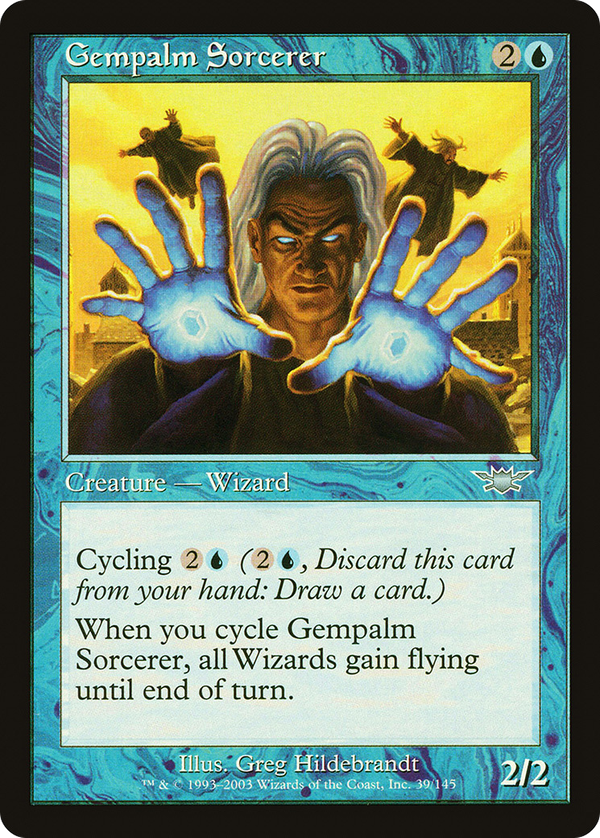
Rules text
(, Discard this card: Draw a card.)
When you cycle this card, Wizard creatures gain flying until end of turn.