Galestrike


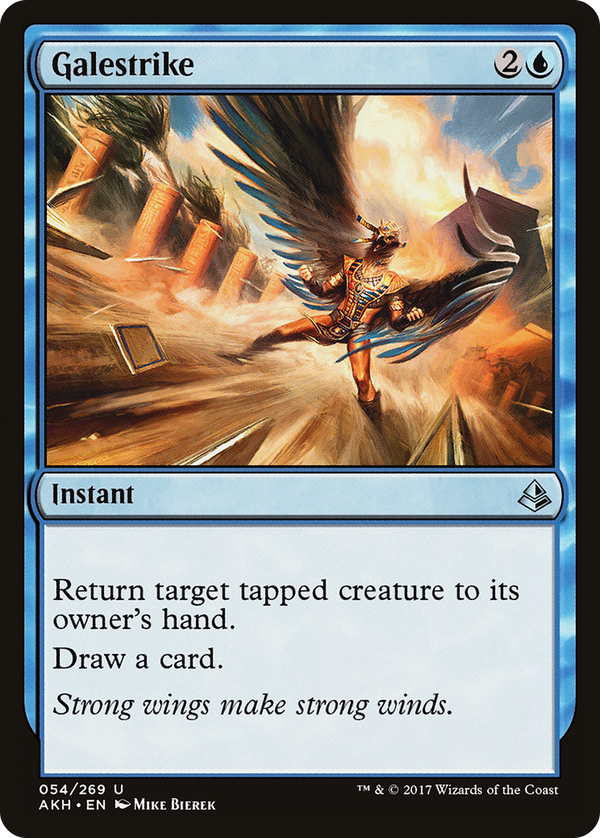
The requirement that the target be tapped is the whole engineering problem. A clean bounce-and-cantrip at this rate would be too efficient for the role, so the cost is paid in a window rather than a mana: the creature has to be tapped, which means you cannot fire it proactively the way you would Unsummon or Vapor Snag. It is reactive by construction. The natural lines fall out of that restriction: catch a creature after it has swung and bounce it past the point where the attack mattered, or return an attacker so it has to be recast before it can threaten again. The cantrip addresses the cost every bounce spell pays. Returning a creature is a tempo play that inherently trades a card (you spend one, they keep theirs); drawing back replaces the spell, so the exchange nets to roughly even on cards while the tempo swing lands on your side. It belongs to a long line of blue conditional bounce that buys efficiency by narrowing the firing window, the same logic behind effects keyed to attacking or specific board states. The real lever comes from summoning sickness: a returned attacker cannot swing again the turn it lands, so a one-card answer stretches into a multi-turn tempo swing when the window is read correctly. One caveat the restriction tempts players to misread: bouncing a creature does not stop an ability it has already activated. Once that ability is on the stack, returning the source resolves nothing.