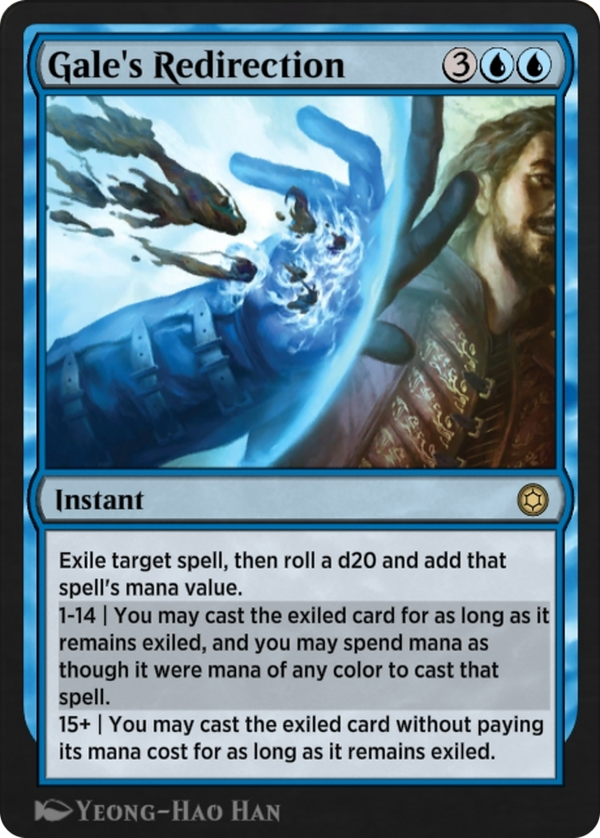
Gale's Redirection


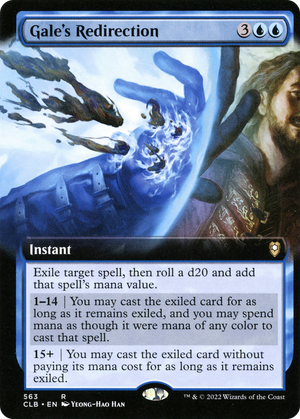
Counterspells traffic in certainty: the spell dies, and you paid to be sure of it. This one keeps the certainty—the target is exiled no matter what—and adds a die roll on top, and that roll is the entire point. The floor already justifies the five mana, because exiling a spell and then casting it yourself, with color-fixing thrown in, is a hard steal rather than a soft deflection. You are not neutralizing a threat; you are turning it against its caster. The d20 layer only sweetens what floors out as a Commandeer-style theft: land on 15 or higher and the exiled card comes free of its mana cost entirely, turning an opponent's big-mana bomb into your own tempo swing. The variance is skewed in your favor by the roll math, since the spell's mana value is added to the d20, meaning the expensive spells worth stealing are exactly the ones most likely to clear the threshold and come free. That coupling is the clever bit: the bigger the theft, the better your odds of theft-plus-discount, which inverts the usual counterspell logic where the scariest spells are the hardest to answer cleanly. It sits in the dice-rolling lineage that treats randomness as a texture rather than a liability, and it earns its variance by making every outcome a good one. There is no whiff band here, only a good result and a great one.