Fruit of Tizerus

Two life for one black mana is a rate no one has ever wanted, which is precisely the point: the front side is a throwaway, a spell you cast reluctantly or never at all. What escape buys is a graveyard that keeps paying out. Once the yard is stocked, this becomes a repeatable two-point loss of life that returns every time you can spare four mana and three cards to exile, turning what looks like a dead sorcery into a recurring resource. The design leans hard on that asymmetry: escape is the entire reason the card exists, and it prices the front side low enough that you never feel robbed casting it early to fill the bin it will later feed on. The three-other-card exile clause is the discipline keeping the loop from being free; each recast eats a chunk of your graveyard, so the card wants to be surrounded by self-mill, cheap cantrips, and other escape spells all competing for the same fuel. In an attrition shell it functions as a slow clock that never needs to be drawn again, the kind of two-points-at-a-time closer that finishes games where nothing else can get through. Whether that clock is fast enough to matter is a deckbuilding question; the identity is clear. This is a reach card built to be recast from the yard, not a spell you cast for value the first time.
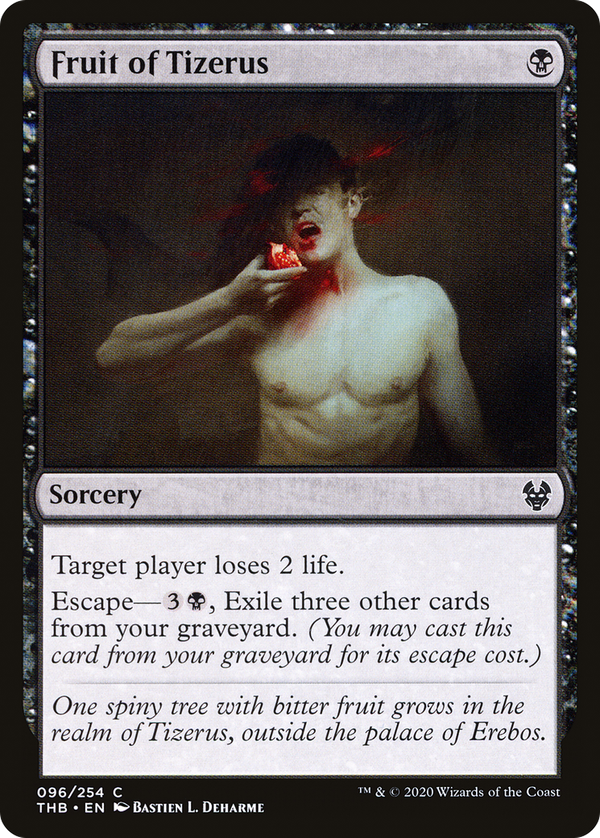
Rules text
 , Exile three other cards from your graveyard. (You may cast this card from your graveyard for its escape cost.)