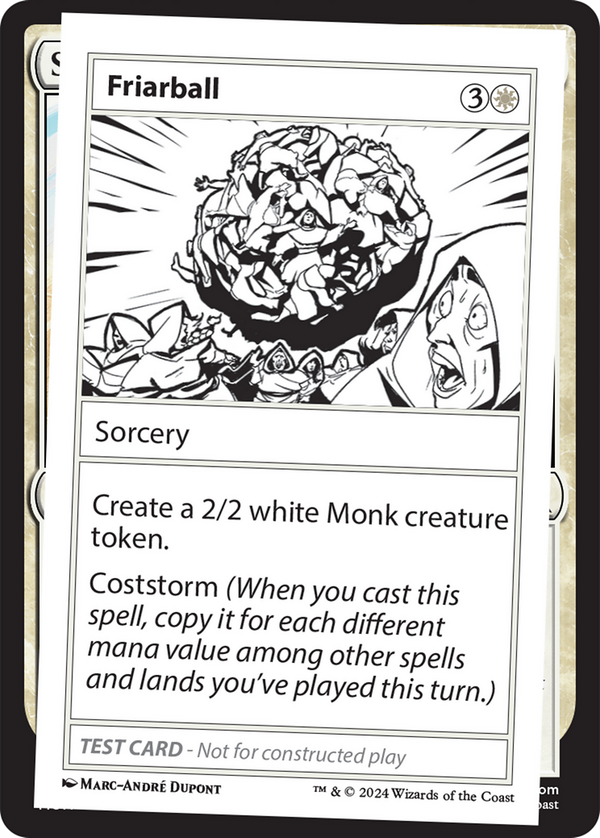
Friarball


Coststorm is the payoff-engine mechanic wearing a joke set's clothes, and the design puzzle it poses is unusually literal: the token count here is not tied to spell count or a running storm tally but to the number of distinct mana values you have logged this turn. That distinction is the whole design. A traditional storm mechanic rewards volume, so it fills your turn with the cheapest redundant spells you can find; coststorm inverts the incentive, asking you to play a curve rather than a pile. Cast a one-drop, a two-drop, a three-drop, and drop a land (lands count as zero, so they contribute a value nothing else in that sequence does), and this modest token-maker fans out into a small monk army; flood the turn with five copies of the same one-mana cantrip and you have added nothing to the multiplier. It is a counting problem dressed as a white common, and the friction is baked into deckbuilding: you are rewarded for spread, punished for redundancy, and a single well-chosen mana value can be worth more to the copy count than three extra spells on the same number. The base effect, a lone 2/2 vanilla body, is deliberately unremarkable so that the mechanic carries all the weight; the card exists to demonstrate the counting rule, not to justify itself on rate.