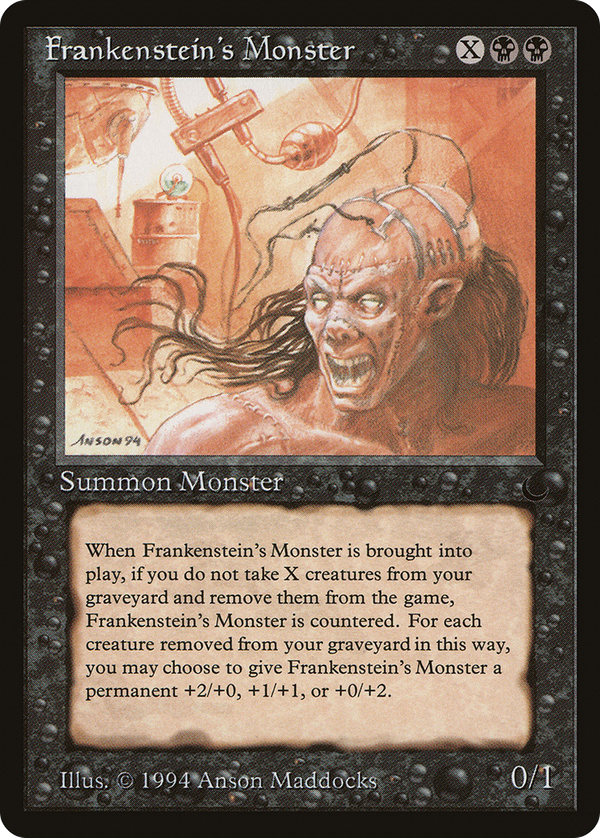
Frankenstein's Monster


The first attempt to turn the graveyard into a construction kit rather than a recursion target. The graveyard-as-resource was a young idea when this came out, and most of its contemporaries just reanimated bodies wholesale; this one asks you to dismantle them for parts. Each creature card exiled buys a counter, and the per-card choice (you pick +2/+0, +1/+1, or +0/+2 for each one) means the same fuel can be poured into a beater, a wall, or something balanced, decided on the way in. The fail-state is the design discipline that makes the rate honest: if you cannot exile the X creatures you committed to, the body never arrives, it goes straight to the yard, and you have spent your mana on nothing. That all-or-nothing entry tax is what keeps the double-black frame from being free value: the two black pips and the X both have to be paid before anything sticks. The counters themselves are the wrinkle that has aged most interestingly, because they are bespoke power-and-toughness counters with named values rather than a generic stat boost, which means modern machinery that doubles or moves counters interacts with them in ways the designers never anticipated. It is a baroque, fiddly engine from an era when Magic was still working out how much bookkeeping a single creature could carry, and it reads like a thesis statement: the graveyard is not a place you bring things back from, it is a place you mine.