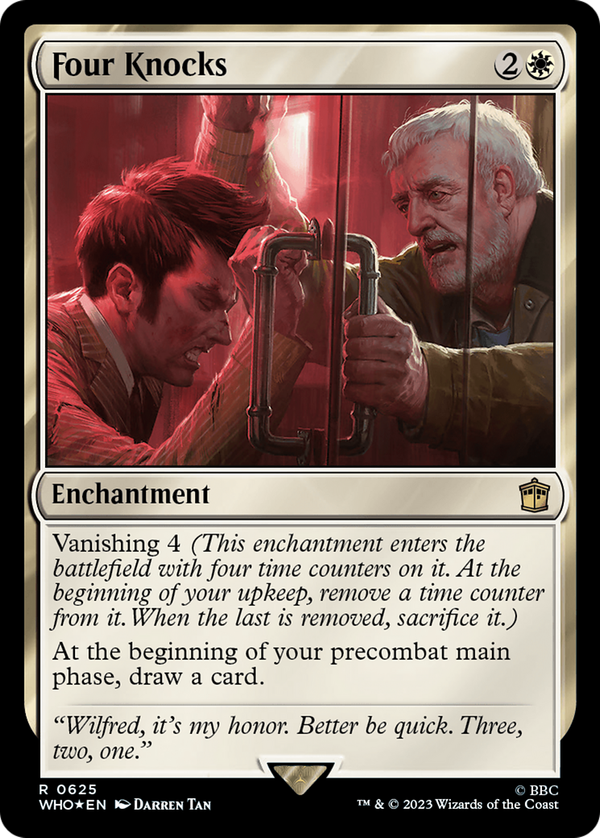
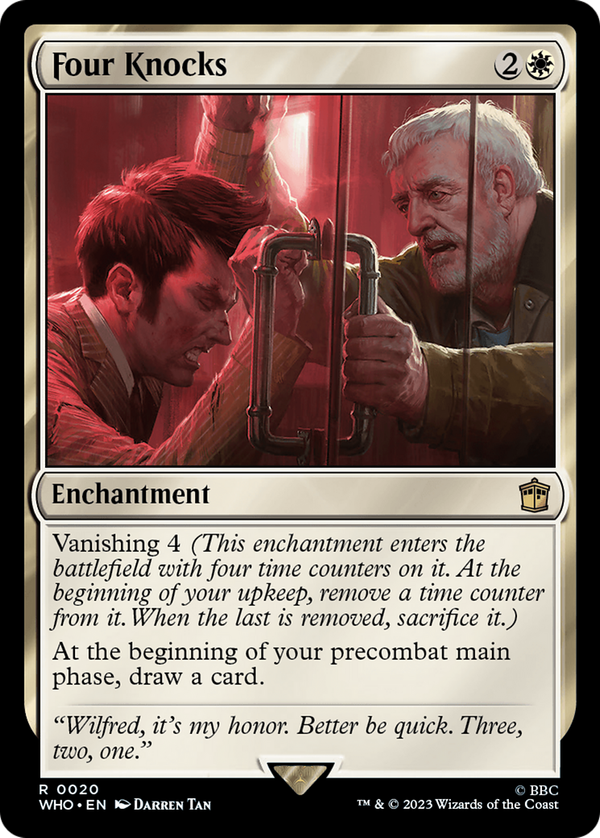
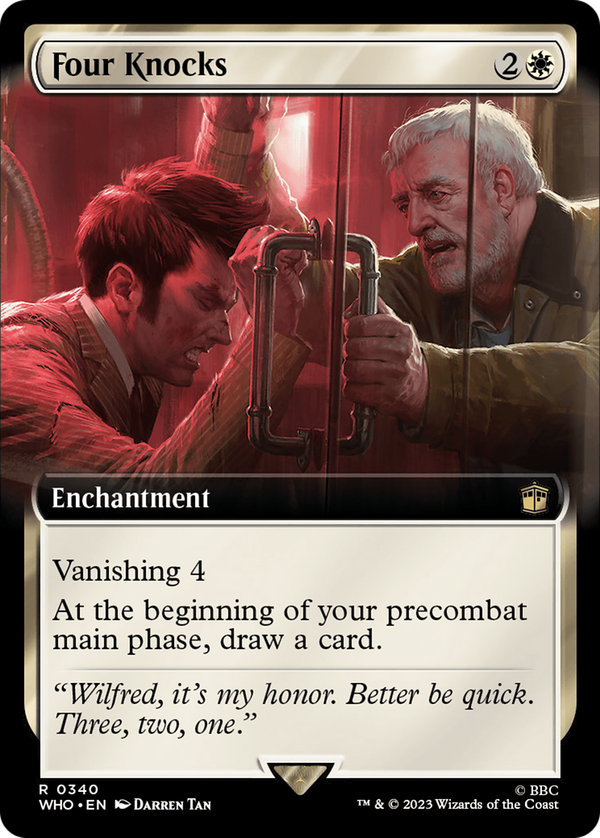
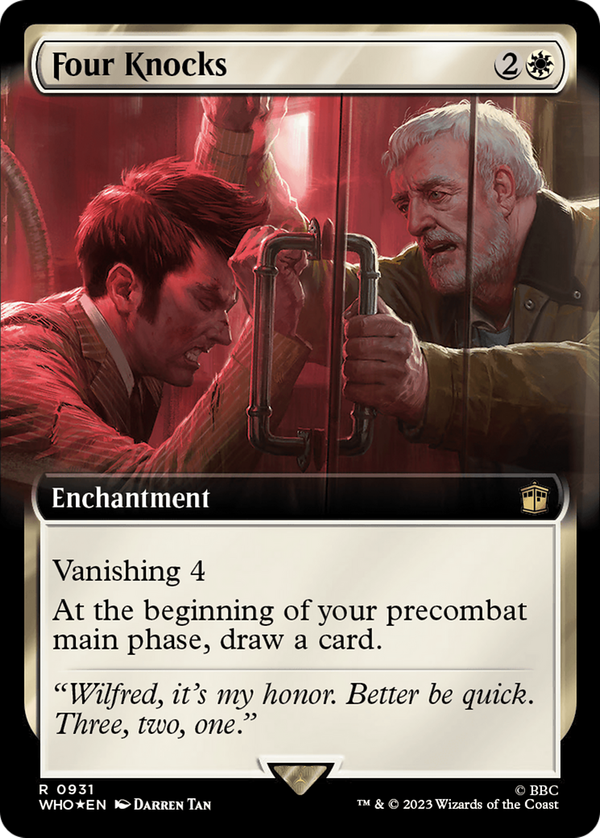
Four Knocks


Card advantage on a countdown clock. Most white draw engines either cost life, tie themselves to a fragile body, or ask you to jump through some hoop each turn; this one just pays out at the start of your first main phase, no strings, no upkeep tax beyond watching the sand run. The catch is baked into vanishing: the enchantment enters with four time counters, sheds one each upkeep, and sacrifices itself when the last comes off. That fixed lifespan is what makes an unconditional white cantrip engine legal to print. An Enchantress-style effect that drew every turn forever would warp the color's grindy midrange plans; capping the payout turns an open-ended engine into a known quantity you can plan around. The timing is the wrinkle worth understanding, and it cuts against you: because the final counter is removed during your upkeep, the enchantment is sacrificed before your first main phase ever arrives, so the last draw trigger never fires. Cast on your turn, it typically nets three cards, not four; the fourth counter buys the enchantment its resolution, not a card. That also means anything that adds time counters or proliferates the clock is not just extending its life but directly buying back draws. What you are paying three mana for, then, is not raw power but predictability: a small, front-loaded burst of cards spent over the next few turns, gone on schedule, with none of the recursion or open-endedness that gets a draw engine banned.