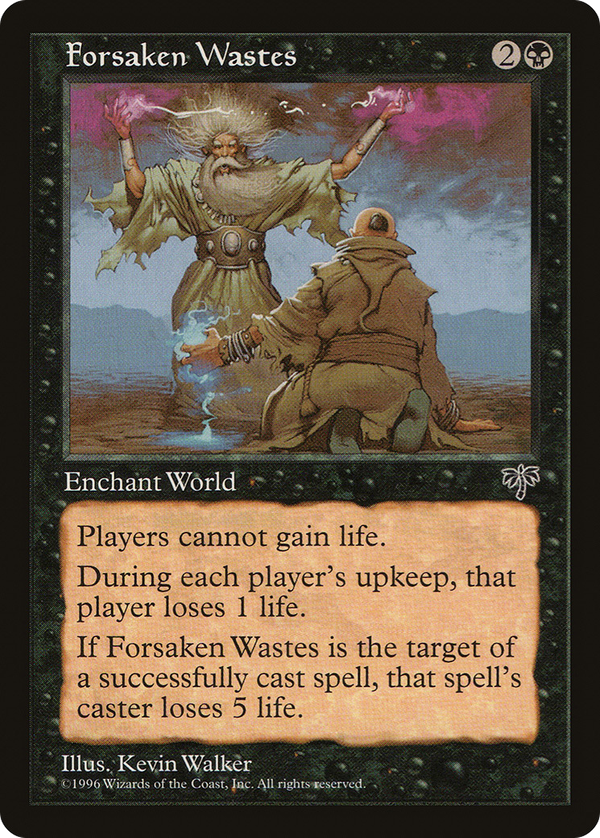
Forsaken Wastes


The third clause, which bleeds five life from anyone who points a spell at this enchantment, is the design idea worth studying. World enchantments already enforce a single-copy rule (a new one replaces the old), so the card lives in a category built around exclusivity; bolting a removal-tax onto that frame turns disenchant from a reflex into a real decision. The first two clauses do the heavy lifting most players remember: a global "can't gain life" rider paired with a per-upkeep symmetric life-loss clock, the kind of slow timer that punishes whoever is least equipped to race it. Symmetry on paper rarely holds in practice, since the controller builds a plan around outlasting the bleed while denying opponents the lifegain that would otherwise blunt it. Lock the door against lifegain, start a clock, and tax anyone who reaches for the handle with a single-target spell: that combination makes this a self-defending attrition piece rather than a fragile build-around. The targeted-removal punishment is the structural pressure valve, and its precision is the point. It does nothing against a board wipe or a sweeping mass-removal effect, only against the cheap pinpoint answer. That narrow scope is what stops the lock from being airtight while still charging a real toll to break it: an opponent who wants the enchantment gone must either pay the five life or find a removal effect that never targets at all.