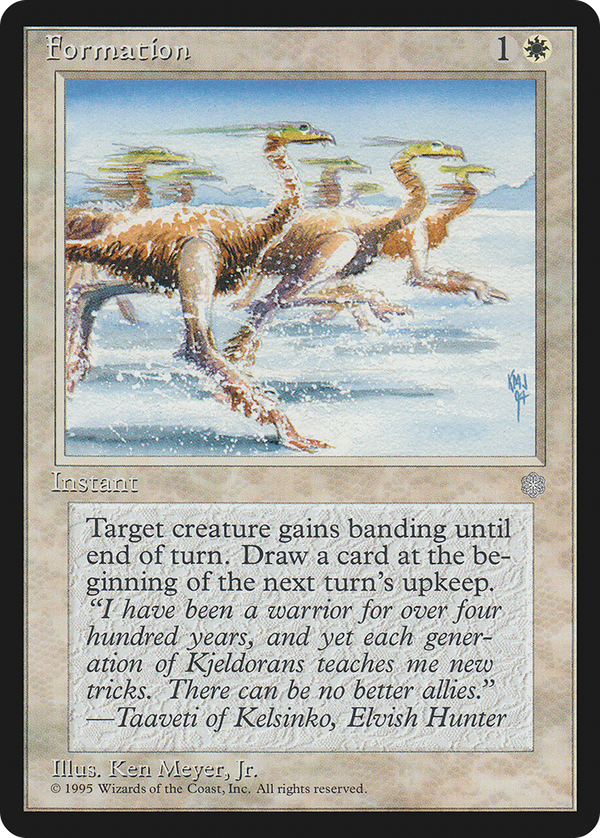
Formation


Granting banding at instant speed exists mainly to bend a single block into a puzzle: with banding on a defending creature, that creature's controller divides an attacker's combat damage, so a small creature can absorb a giant and survive while you parcel the rest where you like. Most banding cards just staple the keyword to a body and trust you to know what to do with it. The twist here is the deferred cantrip. You cast it during combat to rewrite a block, then the upkeep trigger hands you a card on the way out, so even when the combat math does not break in your favor, the spell is not a dead draw. That delayed card is doing real design work: it pays the tempo cost of a one-shot effect that only ever matters in a single combat step, the way later cantrips justify narrow spells by attaching a replacement to them. Banding has sat on the do-not-reprint shelf for decades because new players cannot parse the damage-assignment rules, so the mechanic this card depends on is functionally extinct in modern design. What remains is an artifact of a moment when Wizards still thought banding could anchor a build-around, and decided the fix for its awkwardness was making sure you never felt you wasted the card.