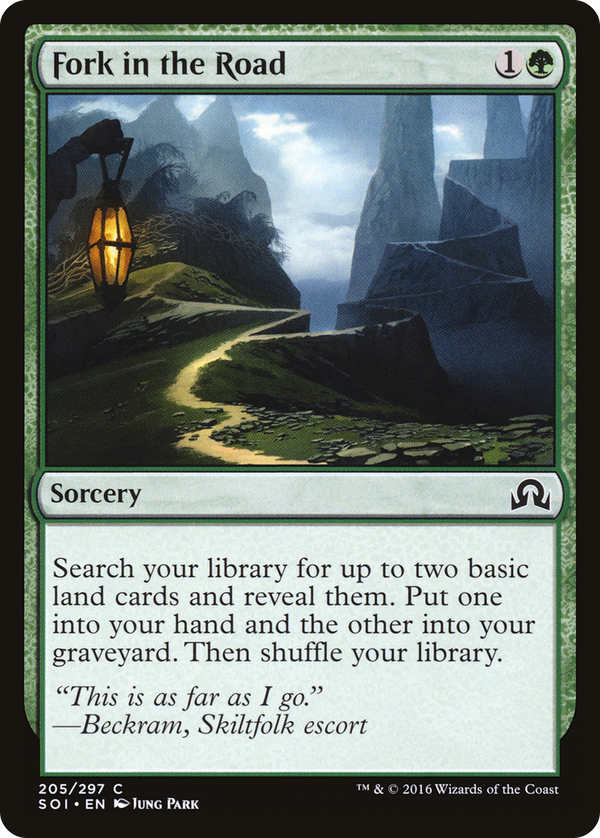
Fork in the Road


Two basic lands leave your library on the same sorcery, but only one lands in your hand; the other drops directly into the graveyard. Read as fixing, it looks like a strictly worse Rampant Growth: you find a basic, but you find it into your grip rather than onto the battlefield, and the second card seems thrown away. That reading gets the design backwards. The bin land is deliberate, a controlled self-mill that costs nothing when you were never going to draw or play that surplus land anyway. So the card does two jobs in one cast: it smooths your colors and it seeds your graveyard, and the value of the second half depends entirely on whether the deck around it cares what is down there. For a shell counting card types toward delirium, or one that recurs permanents from the yard instead of drawing off the top, the discarded land is a payoff rather than a loss. Set against Cultivate, which puts the second basic onto the battlefield and genuinely accelerates you, this offers no ramp and no permanent; it trades the mana advantage for graveyard fuel. That makes it two different cards depending on what surrounds it: a purposeful engine piece in a graveyard-focused build, and an awkward, slow way to dig up a single land in anything else. What you built around it decides which one you drew.