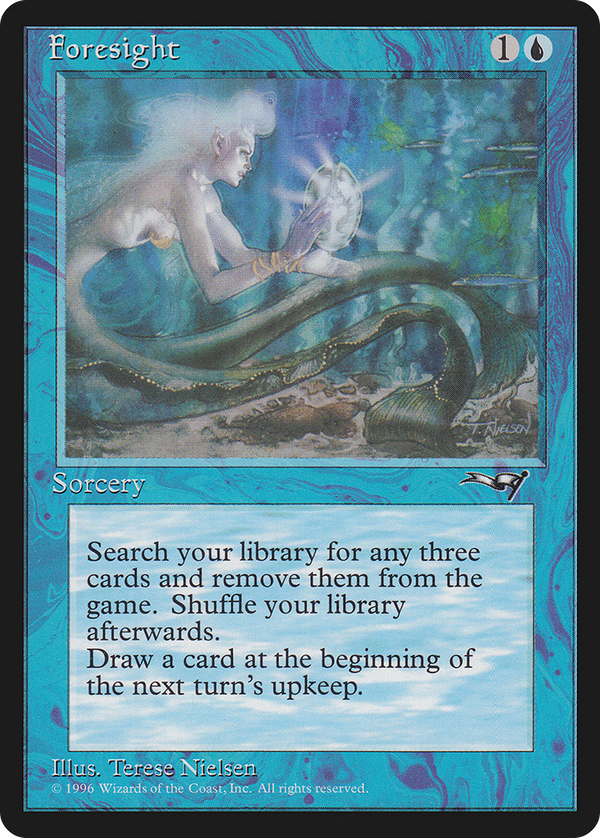
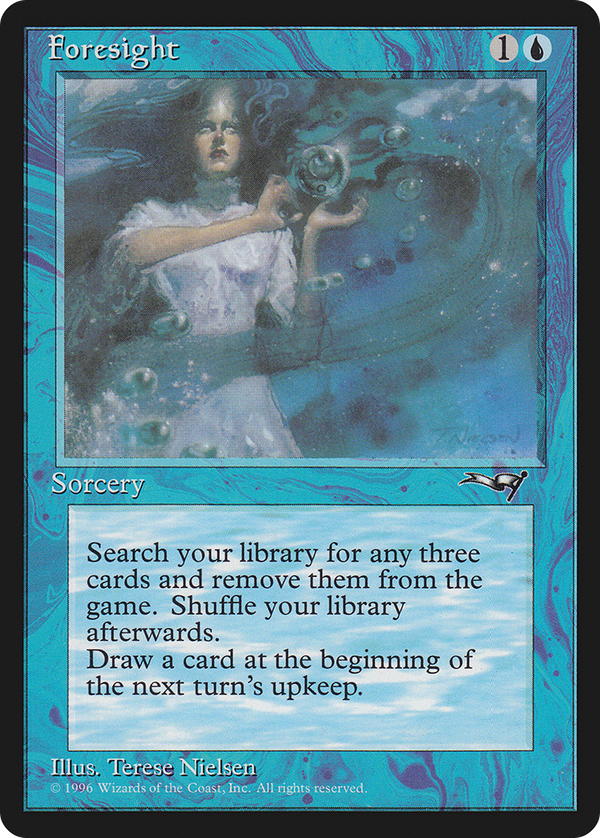
Foresight


A study in how much friction old design wrapped around the idea of "knowing your deck." The math reads generous: search your entire library, no restriction on what you grab, and pull three cards into view. But the structure undercuts every part of that promise, because you do not keep what you find. The three cards are exiled, the library is shuffled, and then you draw a single card off the top of that reshuffled deck during the next upkeep. The naming is the joke and the design intent both: you "foresee" three cards out of your deck, but foreseeing them is all you get to do. They leave the game, the deck is randomized, and the reward is one ordinary draw, delayed and disconnected from the dig that preceded it. The card replaces itself (one card spent, one card drawn), so it is card-neutral rather than a loss, but it is also card-neutral in the dullest possible way: the selection costs you the very cards it shows you. As filtering it scatters rather than concentrates; as deck-thinning it is brutally inefficient. It reads like a designer pricing the abstract notion of removing cards from circulation before the modern consensus settled on what knowledge of the deck should cost. Later filtering converged on cleaner shapes (scry, surveil, the impulse-draw family) precisely because those let the dig feed your hand, rather than treating the dig itself as a cost paid in cards exiled for nothing.