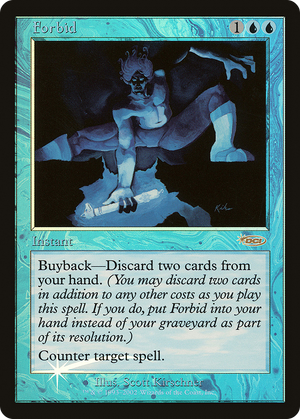
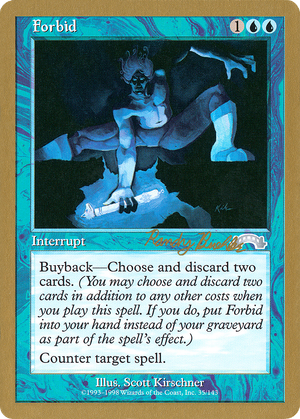
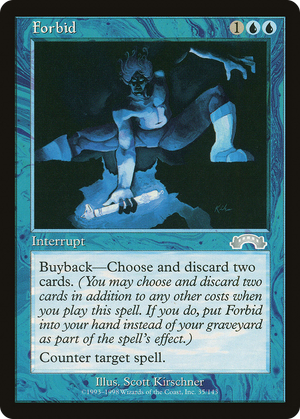
Forbid


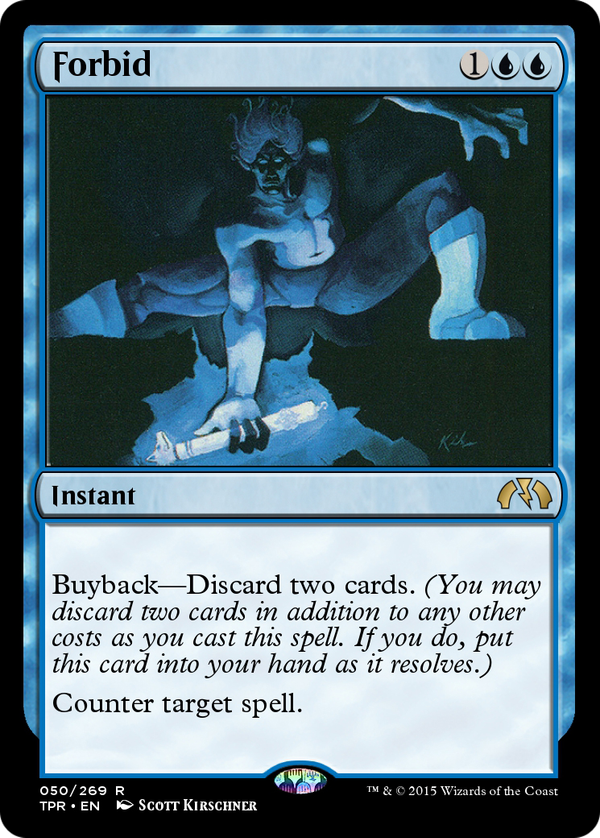
The first clean expression of buyback on a counterspell, and the trade it asks for is the whole point. The base mode is just a slightly overpriced Counterspell, three mana instead of two. The buyback turns it into a permanent fixture: pay an additional two cards from hand and the spell returns to your hand as it resolves, so it stays online turn after turn for as long as you can feed it. That card-disadvantage cost is the design discipline that keeps a recursive counter honest. You are converting raw card count into tempo and certainty, spending two pieces of fuel to guarantee that no threat ever resolves. The math only works if your engine refills faster than the buyback drains, which is why buyback rewarded the kind of grinding control shell that already wanted to be drawing extra cards. Buyback as a mechanic was the throughline of the set that introduced it, attaching a "do it again" tax to spells across the color pie, and this is the version that maps the idea onto permission most directly. It points at the same place every recursive answer eventually does: the question of whether a single card can be a loop rather than a one-shot, and what you should have to pay to make it one.