Fog of Gnats

Regeneration on a black evasive body was a deliberate friction valve in late-'90s design: the recurring black activation is the toll that balances an otherwise unremarkable 1/1, since the body itself does nothing without it. The double-black casting cost signals the intended environment, a dedicated black deck with the mana to keep paying a single black per shield, turning a fragile flier into something that survives sweepers, blocks, and most point removal as long as the controller has untapped lands. The design logic is that an evasive blocker which refuses to die can grind out attrition matchups inch by inch, taxing the opponent's removal and chipping away in the air while mana stays available to reset it. What dates the card is the same thing that defined it: regeneration was the era's answer to durability before indestructible existed as a keyword, and it carried real cost (it taps the creature, it does nothing against exile, and it requires the shield to be set up before damage). A flier that pays to live looks quaint next to later evasive recursion, but the structural idea (an attacker the opponent cannot profitably remove with combat or burn) is the seed of every resilient-threat plan since.
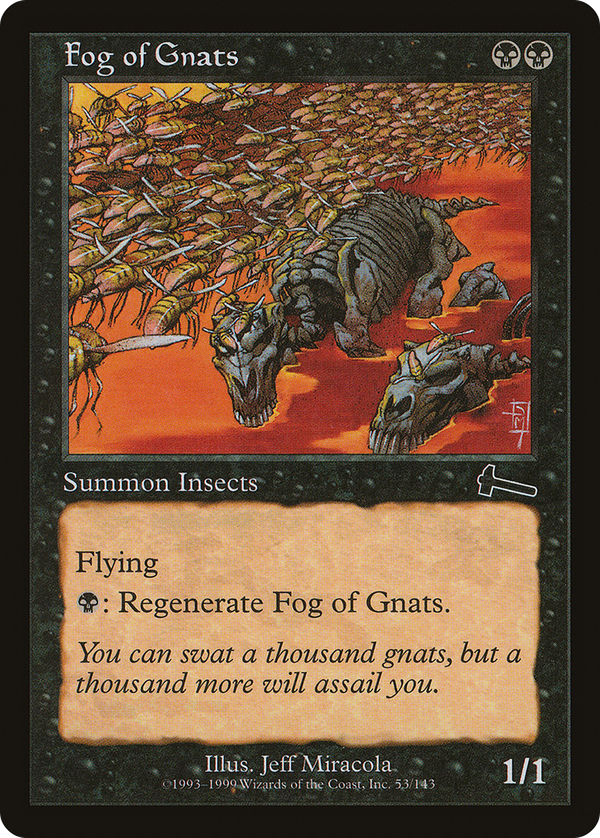
Rules text
: Regenerate this creature.