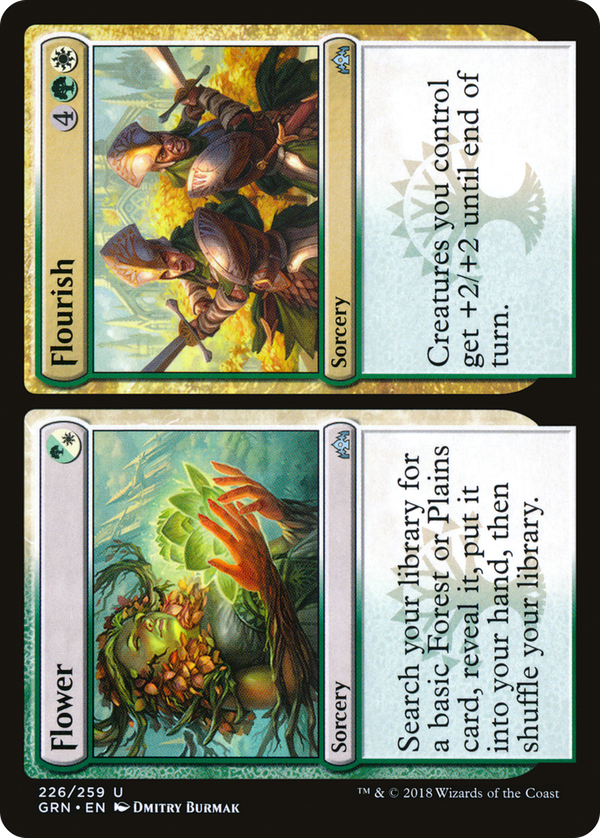
Flower // Flourish




The genius of the split-card frame here is in how it staggers a single card across the entire arc of a game. The left half costs one mana of either color and fetches a basic, a fixing spell so cheap and unconditional you can fire it on turn one without feeling the loss. The right half asks for six mana and turns a developed board into a lethal swing. What unites them is timing: the half you want is never the half you can afford, and the card hedges that for you. Early, when you have lands to find and no board to pump, Flower is the only relevant side; later, when your hand is empty and your creatures are spread across the table, the fetch is dead weight and Flourish is the payoff. A green-white deck running it never draws a card that does nothing, because the dead half is always the one the game has already moved past. That is the design discipline that pays for stapling a low-floor fixing spell to a high-ceiling finisher in the same slot: you are buying flexibility across turns rather than within one. The cost line tells the whole story of the split, the cheap side priced to never be a regret and the expensive side priced to demand the board it rewards.