Floating-Dream Zubera


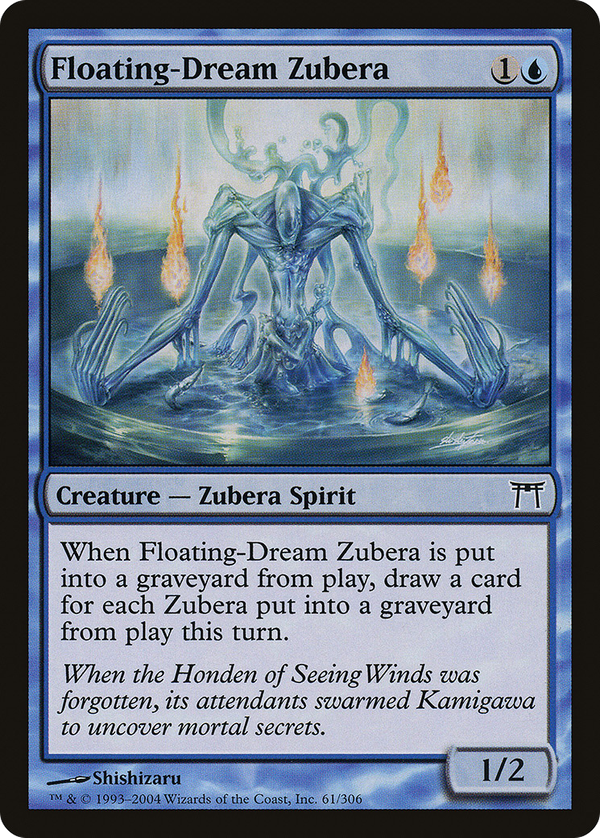
Draw a card for each Zubera that died this turn, and you have the whole strategic thesis of the cycle stated in one clause: these spirits want to die together, in a pile, on one big turn. The blue member rewards synchronization most cleanly of the five. A single Zubera death yields a single card; assemble a board of them, find a sacrifice outlet, and clear them all at once, and the draws compound per spirit sent to the graveyard simultaneously. The fragile little blocker is there to hold a line until that moment arrives, because the design wants it dead, not surviving. The constraint that keeps the payoff from running away is the "this turn" window: value accrues only when the deaths cluster, not when they trickle out over several turns, so the card count tracks how well you staged the slaughter rather than how long the spirits lived. It is an early, legible statement of an idea later designs would chase under different names: a creature whose entire strategic axis is its own death and the deaths of things like it, with the reward tied directly to your sequencing. Among the cycle's payouts, it asks the least elsewhere; card advantage is its own justification, no further engine required to make the deaths worth orchestrating.