Fledgling Dragon


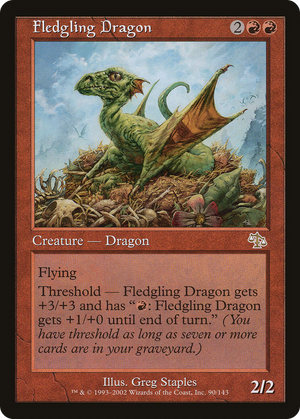
Threshold's design problem was always tempo: a card that pays off only after seven cards hit the graveyard risks being a blank for the first several turns, and a blank that costs four mana is unplayable. This is the threshold payoff that solved that problem most elegantly, because the pre-threshold mode is not a blank. A 2/2 flier for four is overpriced but functional, a body that can chip in and trade while the graveyard fills. Once threshold flips, it becomes a 5/5 flier with a firebreathing engine attached, the kind of evasive finisher that ends games by itself and outscales whatever the opponent has on the ground. The card was built for the graveyard-centric red decks of its era, where seven cards in the bin was not a stretch but the natural state of the game by the midgame. What makes the firebreathing clause clever is that it only switches on at threshold: the dragon stops being a fixed threat and becomes a mana sink, letting a flooding deck convert excess lands into lethal flying damage. The tension it resolves is the one every conditional-payoff creature faces: how do you make the floor playable without making the ceiling boring? Here the answer is a flier you are happy to cast early and thrilled to keep around late.
Rules text
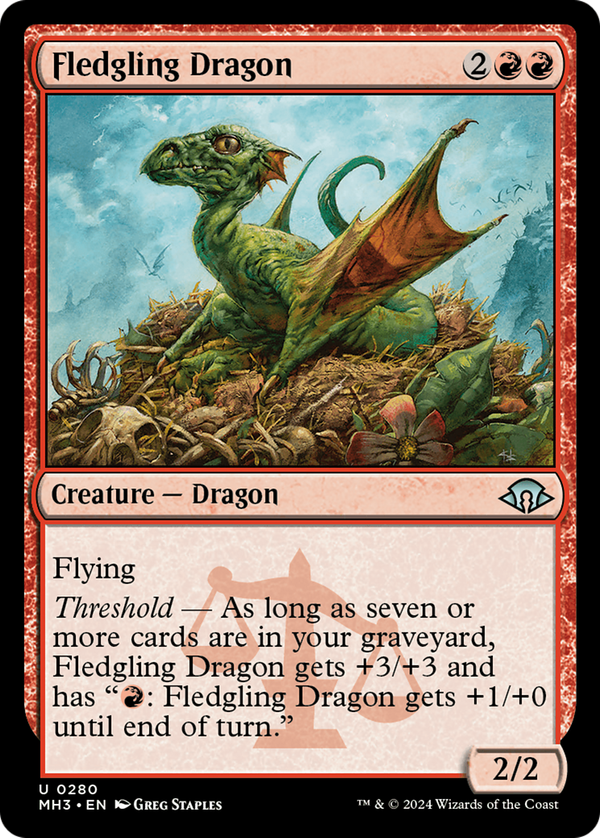
: This creature gets +1/+0 until end of turn."