Flay


Four mana for one guaranteed discard and a second only if the opponent declines to pay one is a rate that reads worse than Mind Rot, and Mind Rot was never a high bar. The randomness is the real problem: you do not get to strip the answer you fear, and the optional second card hands the opponent the cheapest possible escape valve. Most discard wants to be cheap and precise, hitting the relevant card before it can be cast; this is expensive and arbitrary, taking what the dice and a one-mana ransom decide. That combination places it among the era's experiments in taxing rather than stripping, where the spell does not simply take a card but forces a player to choose between paying and bleeding. The design instinct is sound: discard the opponent participates in creates a decision rather than a one-sided loss. The execution undercuts it at every turn, because random selection removes the one virtue targeted discard offers (information and control), and the four-mana price tag puts it well past the window where proactive hand attack matters most. The tension the card is built around (pay or discard) almost never resolves in the caster's favor, since paying one mana to keep a card is a trade nearly any opponent takes gladly. The result is a discard spell that asks a question the opponent answers for a single mana, every time.
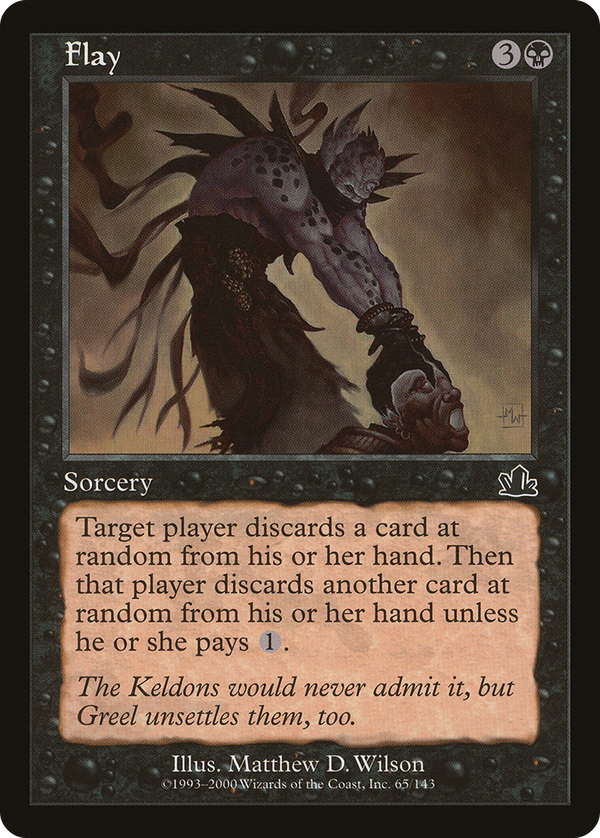
Rules text
 .
.