Flawless Forgery


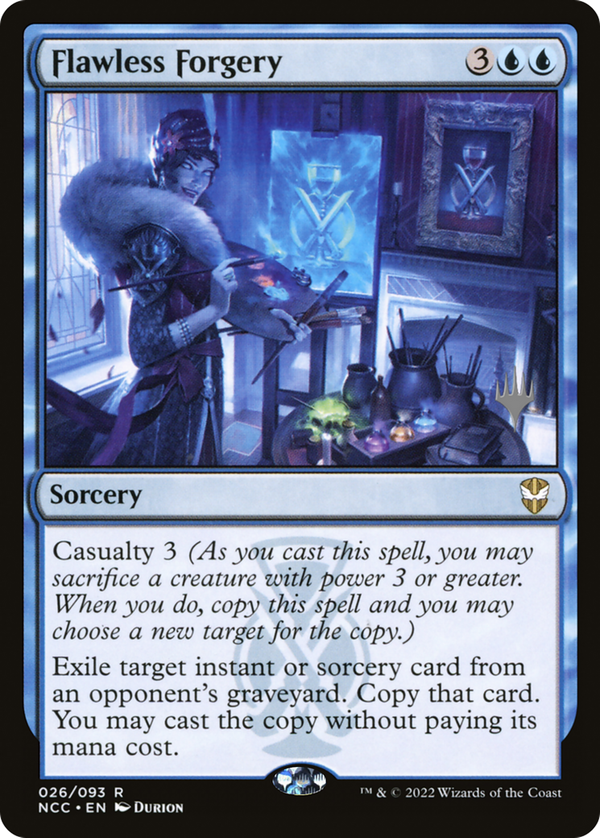
Graveyard theft in blue usually means recursion of your own spells: Snapcaster Mage flashing back what you've already cast, buying back the last good card you spent. This flips the axis outward. It reaches into an opponent's graveyard, exiles the best instant or sorcery sitting there, and casts the copy for free, which means the card's ceiling is set entirely by what your opponents are playing: the stronger the spells your opponents have been resolving, the better this gets. It is a mirror held up to the best deck across the table. What makes the design worth studying is how Casualty layers onto that. Feed it a beefy creature at cast, and you copy the whole spell, aiming the copy at a second graveyard (or the same pile twice). The Casualty payment is not buying raw efficiency: it converts one act of theft into two, doubling both the exile and the free cast. And because graveyards are open zones, the read is never blind: you can survey every pile before committing to the copy, so the decision is made with full information about what a second target can offer. That is what defines the card's tempo. It rewards patience over proactivity, generating value only from what other people have already spent, and it wants opponents who have spent a lot.