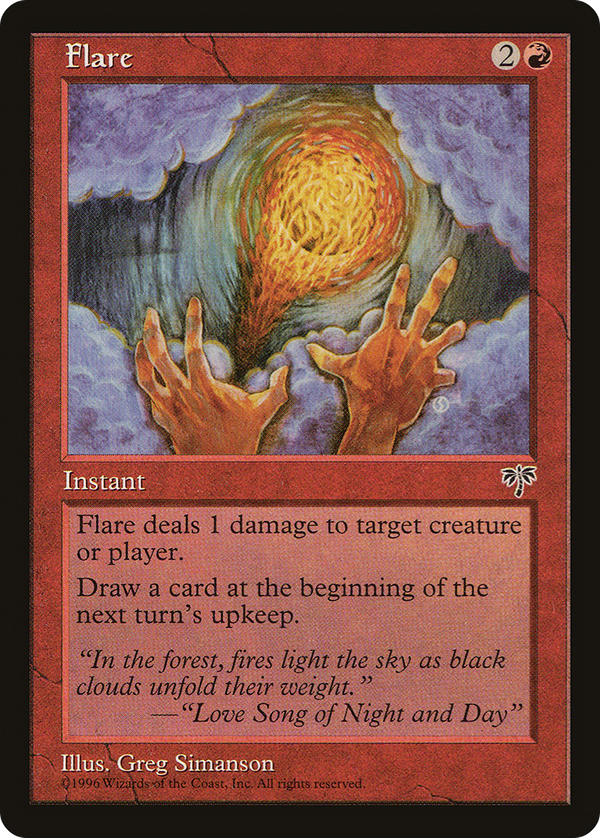
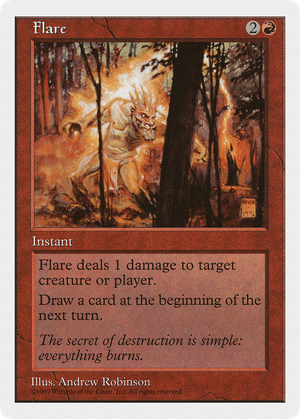
Flare


The interesting move here is the deferred draw. Most cantrips replace themselves on resolution, so the card you spend is a deficit only briefly, from cast until the spell finishes resolving. This one withholds the refund: you ping a target now, and the replacement does not arrive until the next upkeep. Because the spell is an instant, that gap shifts with the timing of the cast. Resolve it during your own main phase and the card arrives on the opponent's upkeep, sooner than a naive read suggests, but still inside a window where you are down a card and they act first. That window is the whole design. The damage is the smallest unit the rules track, so the spell is never about the burn; it is about cycling a slot while squeezing out a point of reach or a clean kill on a one-toughness creature. The reason this stays a footnote rather than a tool is that the rate punishes you on both axes: three mana for one damage was steep even by the cautious pricing of its day, and the delayed trigger stacks a tempo cost on top of an already expensive line. Read it as an early, hesitant answer to a question the game would later answer far more generously, from a moment before drawing a card immediately had settled in as the standard tax for a minor effect.