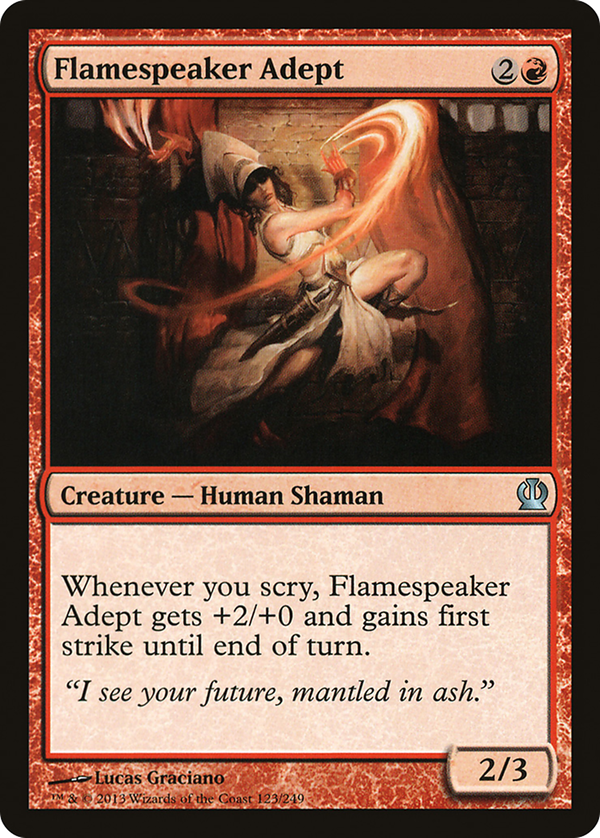
Flamespeaker Adept


The interesting part is the verb it cares about. Most creatures that reward a deck for filtering its draws ask you to cast spells; this one keys off the act of scrying itself, so what matters is that a scry actually happens, not what the spell that triggered it does afterward. A scry stapled to a countered or fizzled spell never fires the ability (no scry, no bonus), but every scry that does resolve, from a dedicated cantrip to the incidental scry bolted onto a hundred other effects, flips a defensive 2/3 into an attacking 4/3 with first strike for the turn. The first strike is doing the heavy lifting: a four-power first striker survives the combat math against most of what a defensive deck wants to block with, turning a body that reads like a wall into one that pressures the red zone. Scry has only grown more common across the years since this kind of design first appeared, which quietly raises the ceiling without any new printing: more red scry sources means a better creature. The catch is that the bonus is fleeting and tied entirely to your filtering cadence; a turn without a scry is a turn it sits at 2/3, so it wants a deck that scrys on a clock rather than once in a blue moon. Built for an aggressive shell that treats library manipulation as a tempo lever, it rewards one narrow kind of red deck and does little outside it.