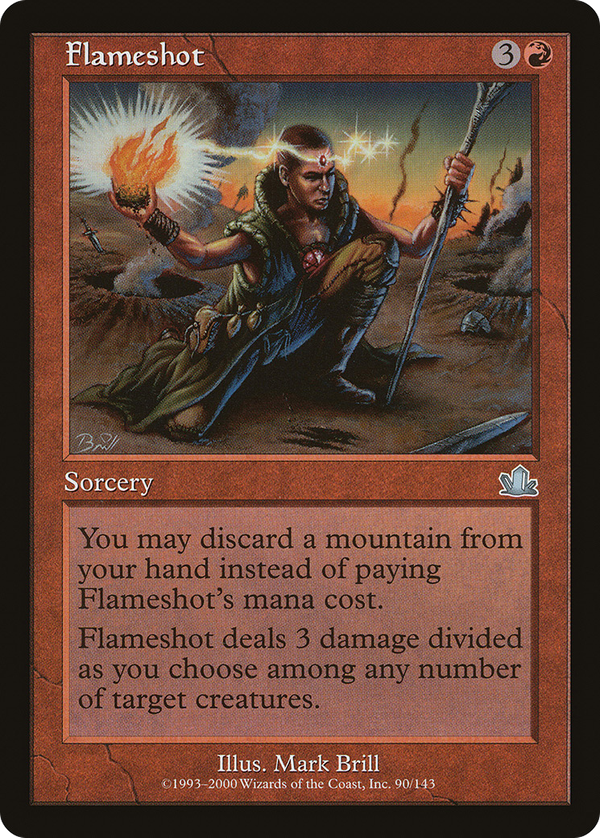
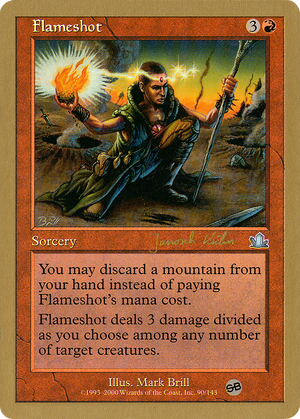
Flameshot


Pay four mana when you have it, pitch a Mountain when you don't: that fork is the entire design, and it bends the spell toward whatever shape the game has taken. The template ran one entry per color in its home cycle, each letting you trade a basic of the matching type for the casting cost: a hedge against the era's notorious mana variance, turning a dead land in a flooded hand into an extra spell when you were short on lands. Flameshot is the red voice, a damage-spreader that can rake three damage across a board of small attackers or stack the full three on a single threat. The pitch mode reads as a discount, but it isn't free: discarding a Mountain spends a card you might otherwise have played as a land, so the real question is whether the card in hand or the land in hand is worth more this turn. That tension cuts in opposite directions at opposite ends of the curve. Early, the Mountain-pitch lets you fire when you're mana-light or want to double-spend a tight turn, buying tempo at the cost of development. Late, when four mana is trivial, you hard-cast and keep your lands, reserving the pitch for the moment your hand has more spare basics than it needs. The spell asks you to read the board and decide which cost the moment can afford.