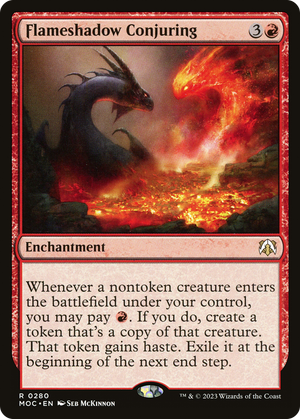
Flameshadow Conjuring


The genius is in what it asks for in return. A red mana per trigger sounds free until you remember the token disappears at the next end step: every enters-the-battlefield effect you copy fires once and then the body evaporates. That reframes the card entirely. It is not a way to build a wide board; it is a way to double down on triggers and one-shot attacks. A creature that drains, draws, or destroys on entry pays you twice; a hasty copy of your fattest threat throws extra damage in and then politely leaves before the crackback. This is the engine half of a long line of flicker-and-copy effects that reward you for stuffing a deck with bodies whose value is front-loaded, where the permanence of the original is beside the point. The repeatable optionality is the whole engine: you choose each turn whether the entry trigger or the haste body is worth a single red, and the answer changes constantly. It rewards a creature base built around entrance effects rather than stat lines, which is a subtler deckbuilding ask than "go wide" engines that came before it. The exile clause is doing quiet design work, capping a permanent's value at a single turn so the effect can be cheap and repeatable without ever snowballing into an unbeatable token army.
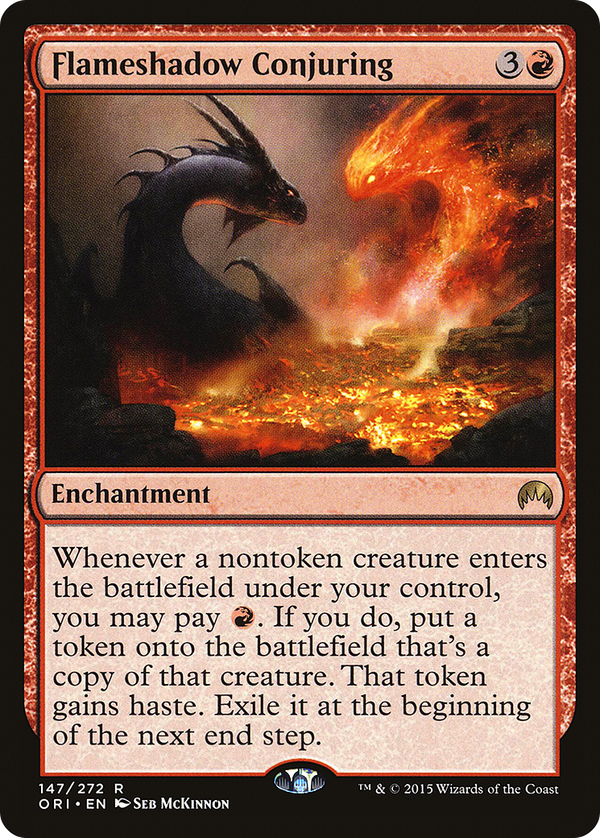
Rules text
. If you do, create a token that's a copy of that creature. That token gains haste. Exile it at the beginning of the next end step.