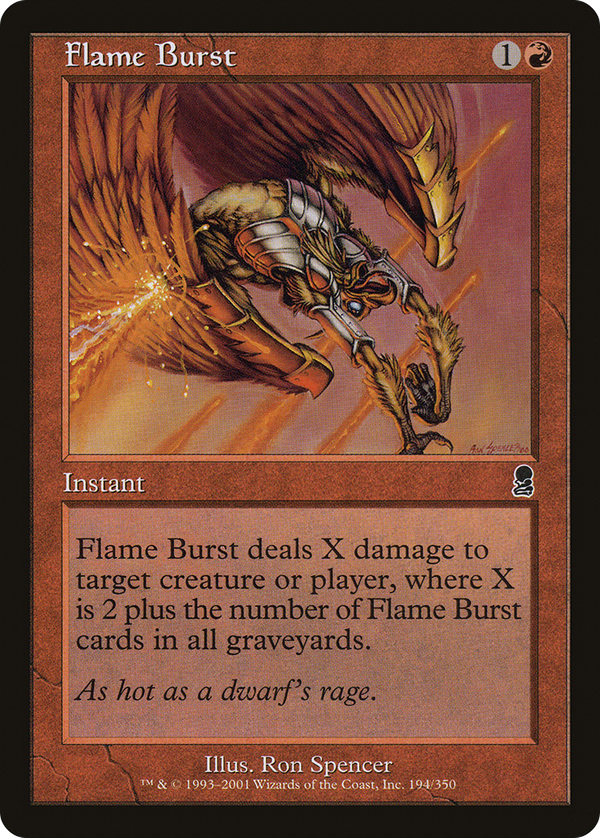
Flame Burst


The scaling clause is the joke and the trap: each copy that resolves and lands in a graveyard makes every later one hit a damage harder, so a deck that runs four and fires them in sequence watches the rate climb cast by cast. The math reads better than it plays. The first copy deals two; the second, with one already in a graveyard, deals three; only by the fourth has it caught up to the rate cheaper burn was offering years earlier. The design is an early example of a spell that scores off its own throwaway resources, paying you back for spending burn the way a graveyard payoff pays you back for milling, except the resource being banked is the card itself. That self-reference is the entire engine, and it counts copies in all graveyards, not just yours, a quiet nod toward mirror matches the surrounding formats never really produced. The puzzle a designer was working through here is how to make a redundant burn spell scale without printing four different names: tie the bonus to the count and let the deck do the accounting. The ceiling is real (a topdecked copy late can erase a midsized creature for a song), but the floor is the problem, and the floor is where most games of Magic are decided.