Feed the Cauldron


The mana-value cap is the entire negotiation here. Black has always paid for its removal in one of two currencies: life, as in the classic pay-life edicts, or restriction, as in a target clause that leaves the big threats untouched. This one takes the second route and then hands part of the payment back. The three-or-less ceiling means it cannot answer the game's genuine finishers, only the engines, blockers, and early curve that populate the bottom of it, but within that band it kills clean at instant speed, no life lost, no combat needed. The Food token is the clever part of the accounting: it only appears on your own turn, so the card is priced as pure interaction when you cast it defensively on the opponent's turn and as a small value engine when you have the tempo to spend it proactively. That split is what keeps the rate honest without stapling a downside to the card. It is a removal spell that behaves differently depending on when you point it, and the mana-value gate is the line that decides which spells it is allowed to be pointed at in the first place. Straightforward black interaction, built to slot into a deck already caring about artifacts and life gain, and to trade a slice of ceiling for reliability at the bottom of the curve.
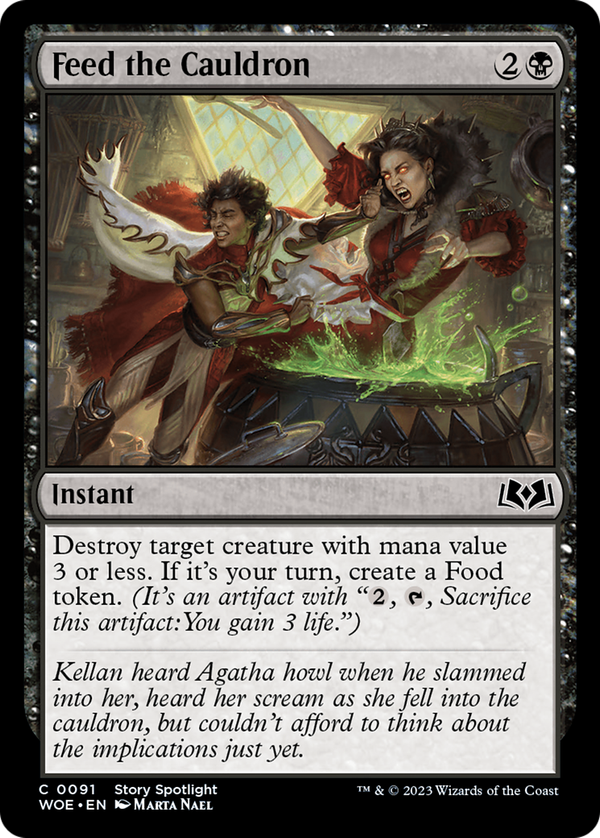
Rules text
,  , Sacrifice this token: You gain 3 life.")