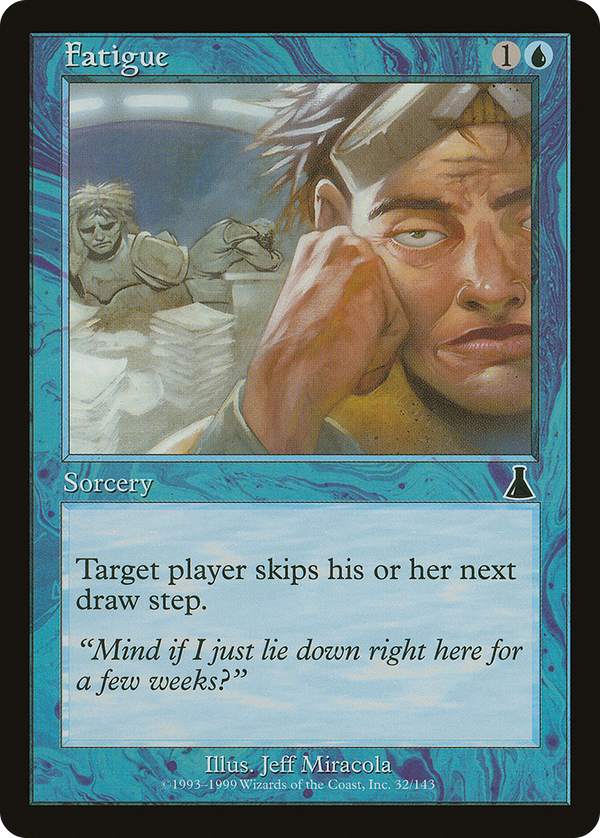
Fatigue


Card disadvantage as a finished product, sold for two mana at sorcery speed: skip a draw step and the target is, for one turn, simply down a card with nothing to show for it. The trouble is that denying a single draw rarely justifies spending a card and a turn to do it; you trade your draw for the suppression of theirs, and the math is a wash at best against a player with things to do with the mana you let them keep. What the design actually represents is an early, blunt sketch of an effect that took decades of refinement to reach viability. The lineage runs through repeatable engines and tempo-positive shells: a one-shot draw-denial spell only works when it costs less than a card or rides along with another effect. Standing alone, it asks you to value the opponent's missing card higher than your own, which is a hard sell outside of a deck explicitly built to keep an opponent permanently empty-handed. The card clarifies why "you draw a card, they don't" attached to a creature or land beats "they skip a draw" stapled to a sorcery: the former banks tempo and a body, the latter banks a wish. A clean look at where the symmetry of card economy breaks, and why so few standalone denial spells have ever been worth the slot.