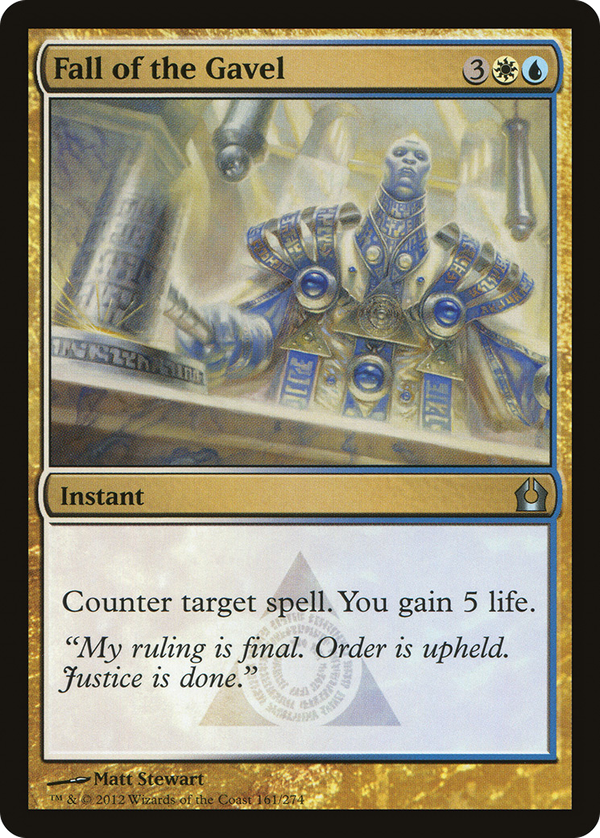
Fall of the Gavel



The price of stapling lifegain onto a hard counter is mana, and five of it is a steep tax against the genre standard. Cancel does the counter half for three; this asks two more for a fixed five-point swing. That extra cost reframes what the counter is for. A bare counterspell is a tempo trade, a clean answer that keeps a turn even. This one bends toward the grindy lifegain control plans that want to push the game long enough for an inevitability engine to win, where five life is not insurance against a single spell but a buffer against an entire aggressive curve. The lifegain is unconditional: it happens whether you counter a fizzling cantrip or the opponent's haymaker, which makes the floor higher than a pure counter even when the counter target is mediocre. The structural cost is that you cannot hold up the answer cheaply, so against decks that punish a slow draw it arrives a turn or two later than the format wants its interaction. It is countermagic for a deck that has already decided to grind, and that has the mana and the patience to spend five on a single spell rather than splitting it across a turn's worth of plays.