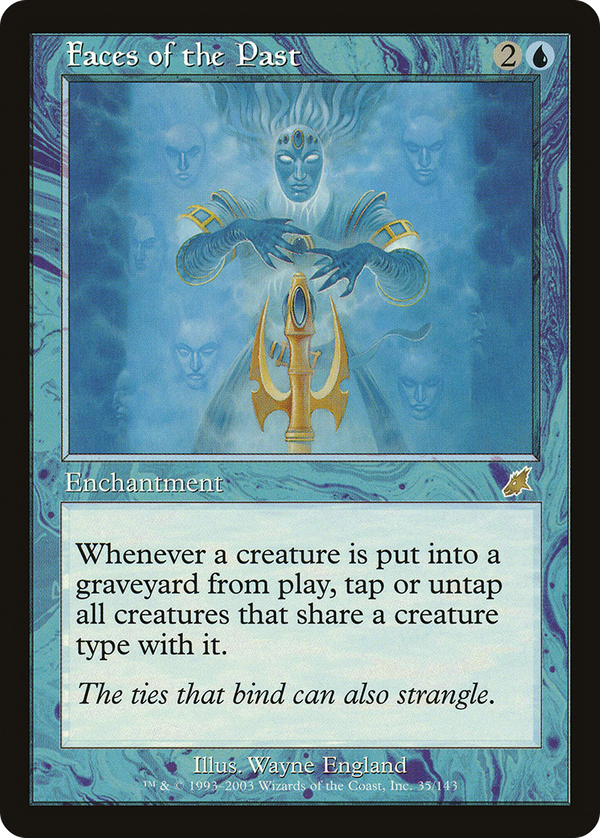
Faces of the Past


The rules text reads like a logic puzzle, and that opacity is exactly why a genuinely strange engine has sat mostly unexamined since the early tribal era. The mechanic keys off shared creature type, so it only does coherent work in a deck built on a single dense tribe: when a Goblin dies, every other Goblin either all taps or all untaps in unison. That untap clause is the prize. Pair a sacrifice outlet with enough type overlap and each death becomes a board-wide untap, which functions as repeatable pseudo-vigilance for your attackers, or as a way to refund creatures you tapped for activated abilities. The untap does not break summoning sickness, so it buys you no extra attacks the turn a creature arrives; it simply readies what was already legal to attack. The tap clause is the tax you pay when an opponent's creatures happen to share a type with whatever just died, and in tribe-on-tribe matchups that symmetry can turn the enchantment against your own board. What keeps it a curiosity rather than a centerpiece is the scaffolding it demands: a reliable death trigger, a tribe dense enough that the shared-type check almost always connects, and a real reason to want your creatures untapped on command. Assemble all three and you have an engine; miss one and you have an enchantment that occasionally taps down your own team for free.