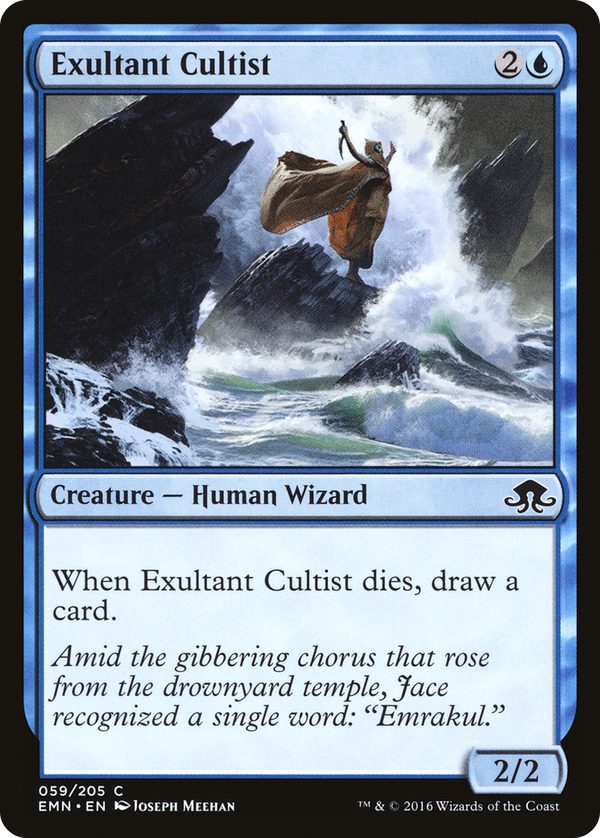
Exultant Cultist


The dies-trigger cantrip is one of blue's oldest comfort designs: a body that pays back the card you spent on it, but only at the moment it actually dies. That precision matters. Structuring the refund as a death trigger rather than an enter-the-battlefield draw shifts where the value lands. An enters cantrip rewards you for casting; a death cantrip rewards you for the specific event of the creature going to the graveyard, so the 2/2 becomes a willing chump blocker and a sacrifice-fodder body that refunds itself when it hits the yard. The distinction is a real limit, not a formality: bounce sends it back to hand with no draw, exile-based removal removes it without a death, and a bloodthirsty opponent who declines to trade in combat simply leaves it standing. The card you draw is contingent on the creature dying, which means the value is negotiated between both players rather than handed to the controller on demand. What the design does well is make blue's early board presence trade up rather than trade down: in a color that historically loathes losing creatures for nothing, this one turns a favorable block or a self-sacrifice into a replacement. Nothing about the rate is exciting, and it was never meant to be. It is the unglamorous attrition body blue prints so that a small creature dying feels like an even exchange instead of a loss.