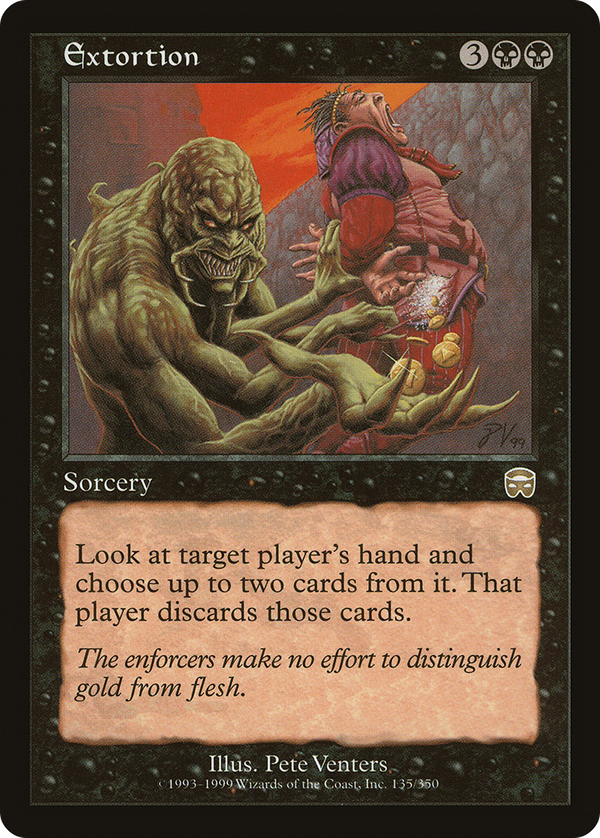
Extortion


You see the whole hand, then take the two cards that hurt most. That is the structural difference between this and a blind effect like Mind Rot, which fires twice but tells you nothing about what it hits: the information and the choice come bundled, so there is no margin of error to spend. Targeted discard that lets the caster pick has always carried a premium over random discard, because the caster's judgment is the resource being purchased, and reading the hand first makes that judgment perfect. The five-mana sorcery cost is where the bill comes due. Hand disruption wants to land early, when the opponent's plan is still tucked away; a discard spell this expensive tends to arrive after the most threatening cards have already been spent onto the battlefield, which is the window this design could never quite close. Black has spent the years since refining the same idea downward: cheaper disruption that still hands the caster the choice, often with a body or a secondary mode attached to justify the mana. What remains is the trade black has always negotiated, certainty against speed, with both dials cranked toward certainty and the rate left to age accordingly.