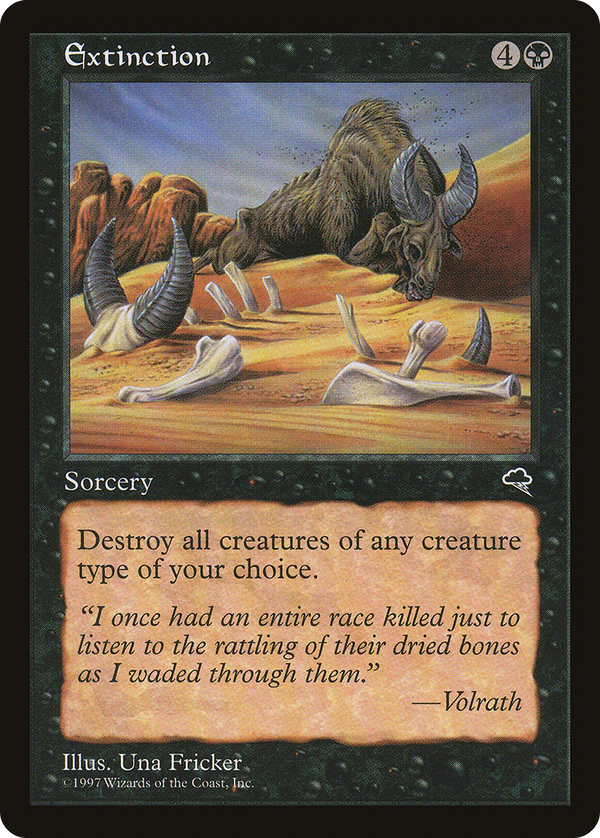
Extinction


A tribal sweeper from before tribal was a deckbuilding pillar, which makes the design read as a curiosity stranded ahead of its own ceiling. Name a single creature type and every creature of it is destroyed, friend or foe, with no payment beyond the five mana. The friction is structural: in a board full of unrelated bodies, naming the right type clears at most a slice, so the rate only becomes a true wrath against an opponent who has committed to one type. That dependency cuts both ways against modern board states, where typelines have grown wider and cheaper synergy decks load up on a shared type by design. Where a conventional sweeper destroys everything and pays for its symmetry by hitting your own side, this one trades symmetry for selectivity: a one-sided answer to a focused tribal deck, or a near-blank against a pile of different bodies. That conditional payoff is why it never settled into the role of default removal; it is a scalpel that only matters when the opponent hands you the seam, and the destroy clause leaves indestructible threats untouched besides. The irony lives in the timeline: the card predates the era when entire archetypes were built on a single named type, so its ceiling rose long after printing without a word of the text ever changing.