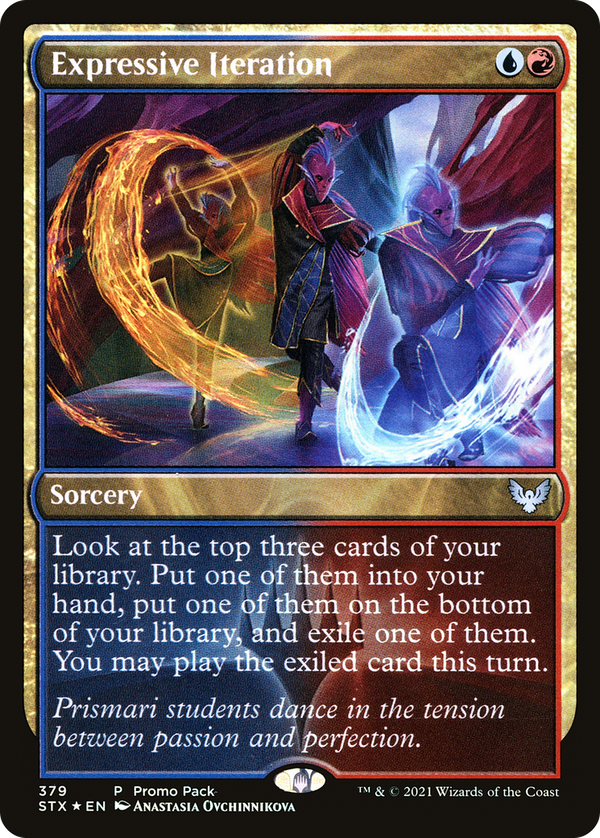
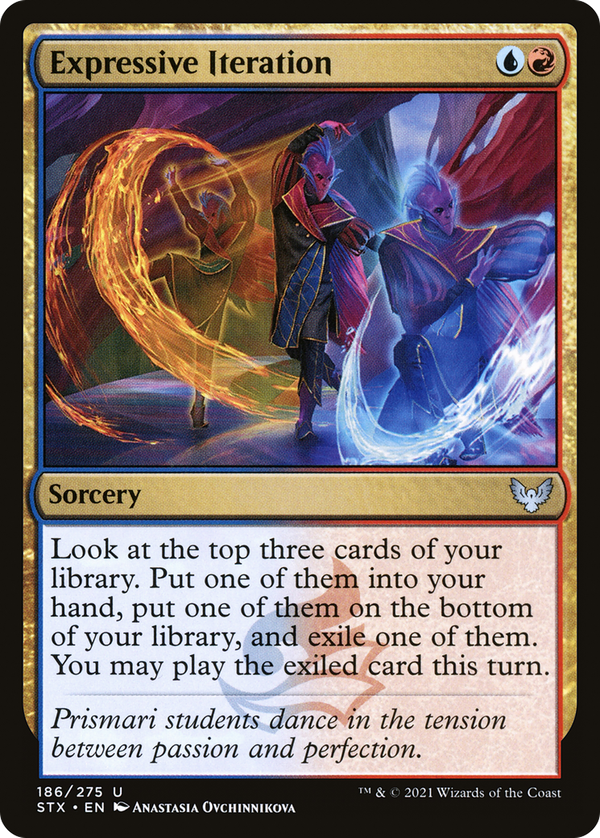
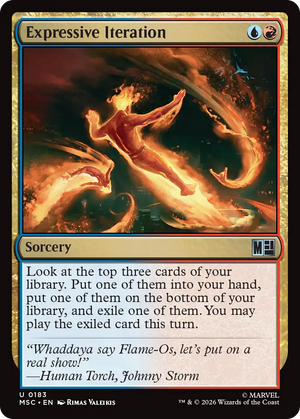
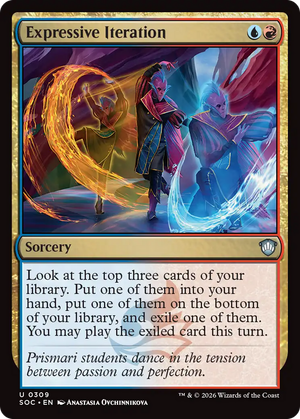
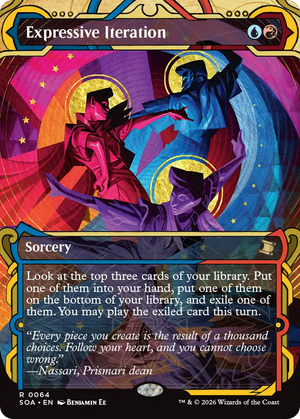
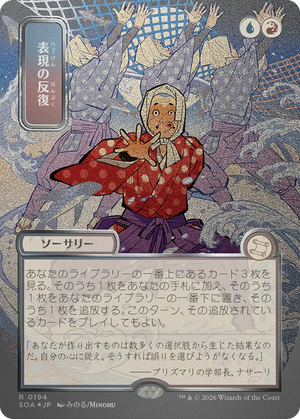
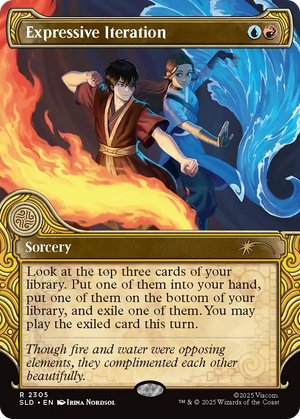
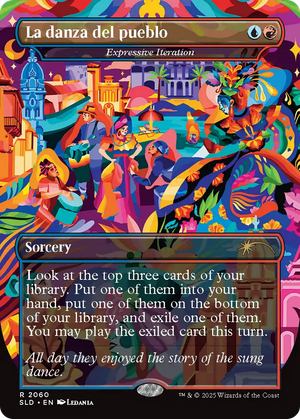
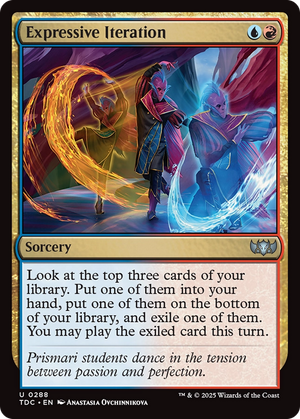
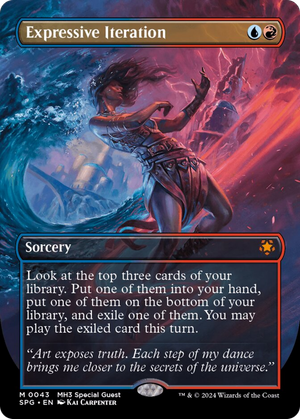
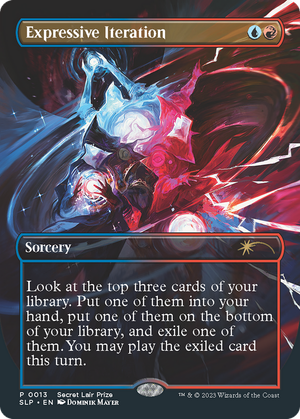
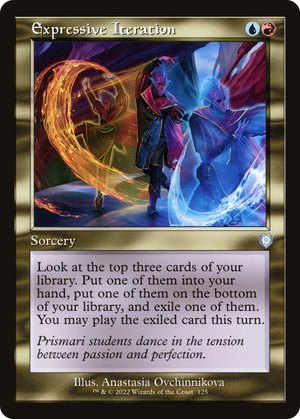
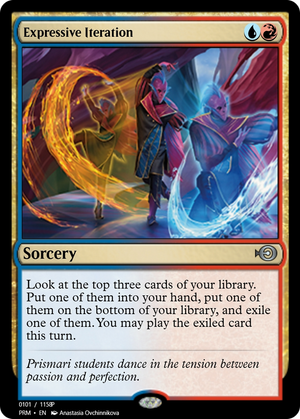
Expressive Iteration


The card advantage is where the eye goes, but the sequencing is the actual design. Two mana for a card in hand plus a card you can play this turn is a raw two-for-one, and in the abstract that rate is stronger than a two-mana sorcery has any business being. What keeps it from being pure card-quality gravy is the "this turn" clause on the exiled card: the third card only counts if you can spend it before the turn ends, which turns the spell into a check on how much mana and how many spells you can chain. Cast it too early and the exiled card rots; cast it as the pivot of a turn where you have lands to make and cheap spells to fire, and it converts a full hand into a full sequence. That constraint is why it slotted so naturally into decks built around cheap interaction and land drops, where the exiled card is almost always a land you can play on the spot. It also rewards knowing your own top three: you exile the card you can cash in immediately (often a land drop), take the card you need next turn into hand, and dump the least useful one to the bottom. The design reads as a modern take on the old two-mana Izzet dig spells, but it does more work than any of them by folding selection, advantage, and a soft tempo demand into a single line, which is exactly why it drew a ban in the format where mana was cheapest.