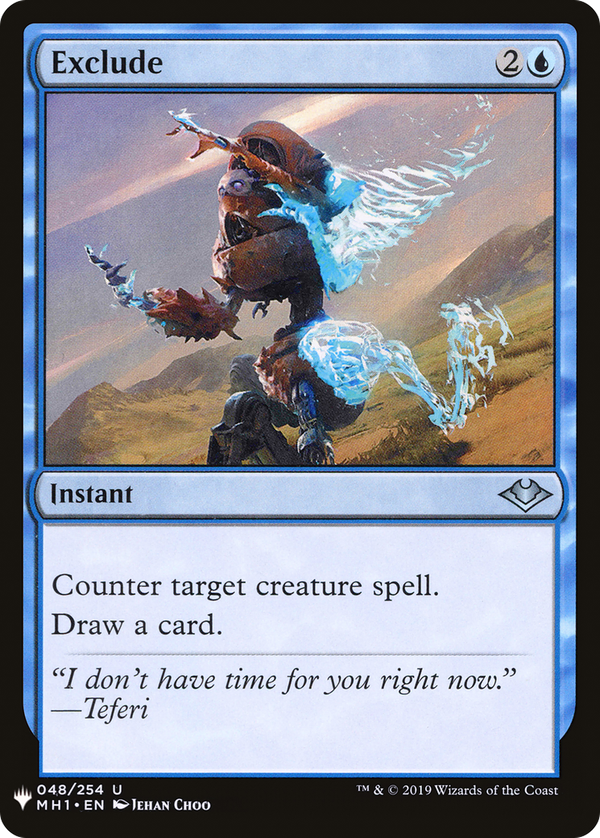
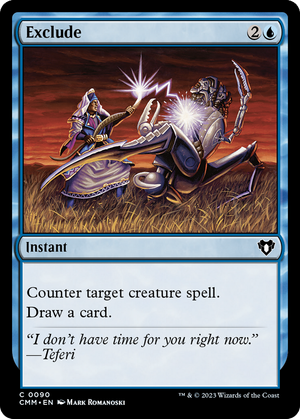
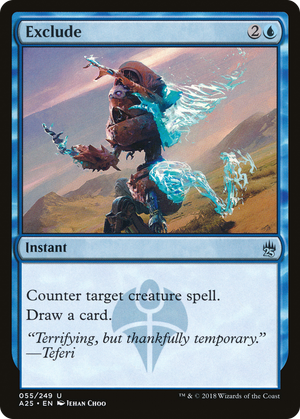
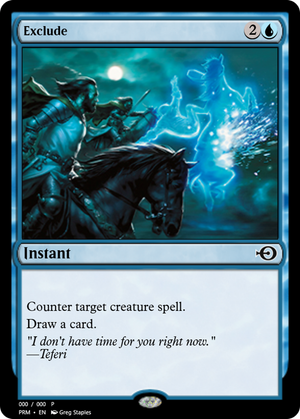
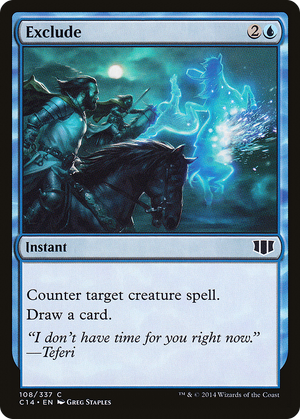
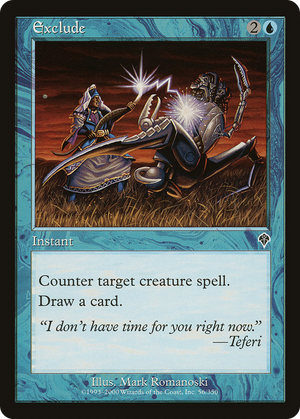
Exclude


A counterspell that refunds its own card. Most permission demands a one-for-one trade: a card to deny a card, leaving you down a resource over a long game; the cantrip here erases that gap, turning a defensive answer into card-neutral interaction that costs nothing but the mana. The price for parity is targeting discipline. It answers only creature spells, so it is dead against the burn, the planeswalker, the board wipe your opponent saves for the right moment. That narrowness is precisely what keeps the rate sustainable: by giving up flexibility, you earn back the card. It rewards control decks that expect to grind against creature-based aggression over many turns, where stopping a threat and digging toward the next answer in a single spell is the difference between drowning in attackers and staying ahead of them. The template it established is now well worn: restrict the counter to one permanent type, bolt on a draw, and the rate stays honest because you never feel the exchange. A counterspell that reads worse than the broad ones on paper can read better in practice, because the replacement card means the trade never leaves a mark.