Excavation


What turns a mundane card-draw enchantment into a piece of political machinery is the open invitation: this draw engine sits in the middle of the table, and anyone, including your opponents, can feed it by burning their own lands. That communal access is a feature of an older design sensibility, one comfortable with symmetry as a balancing force. The cost structure carries its own friction: a mana and a land per card is a steep trade in any deck still trying to develop, so the engine rewards a deck already content to dump lands (one that recurs them, ramps past them, or treats the graveyard as a second hand). The shared faucet is what keeps it honest in multiplayer; a flooded-out opponent can sink dead lands into it just as readily as you can, which means the advantage is never cleanly yours. That openness is also what dates it. The modern instinct is to wall card advantage off behind your own permanents and your own mana, so an enchantment that explicitly lets the table draw off your investment belongs to an era more willing to hand a resource axis to everyone at once. It is a draw engine you build a sacrifice plan around, not a value piece you slot in for raw advantage.
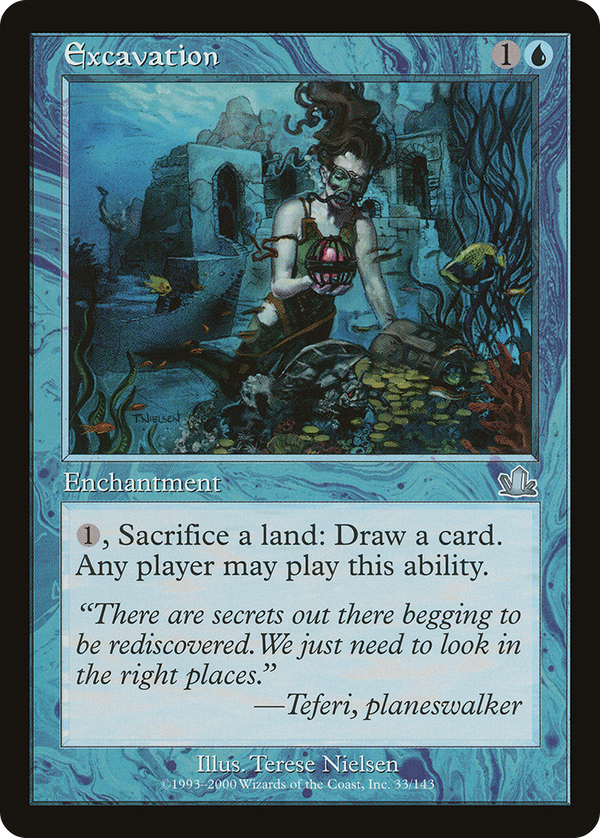
Rules text
, Sacrifice a land: Draw a card. Any player may activate this ability.