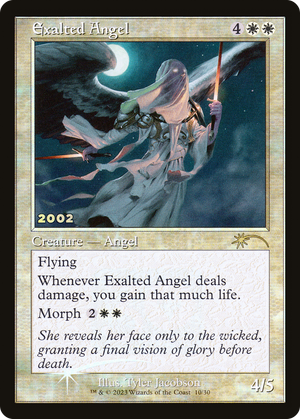
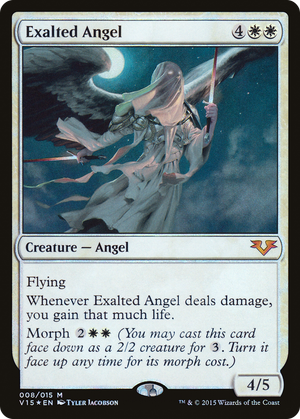
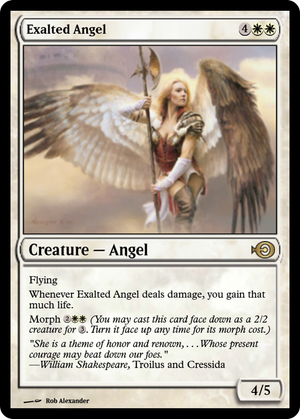
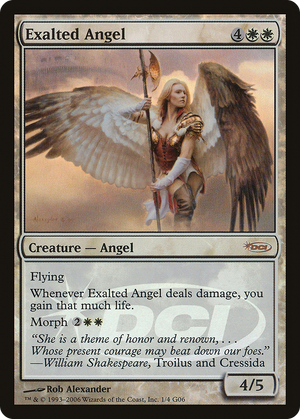
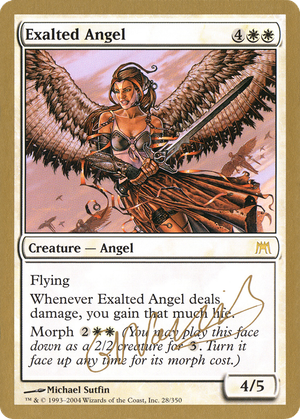
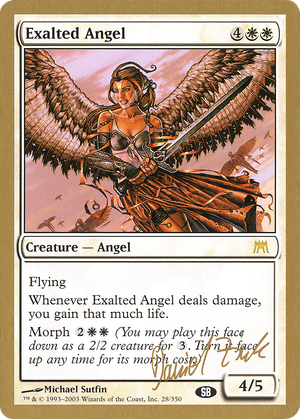
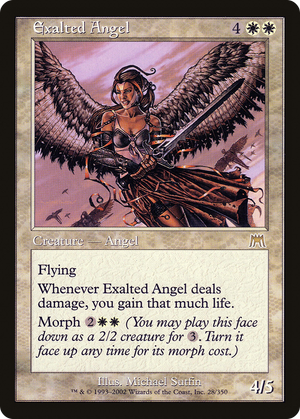
Exalted Angel


Hardcast for six, it reads as overcosted: a 4/5 flier with a lifegain rider in a slot already crowded with cheaper finishers. The trick is that you almost never paid the full freight up front. It comes down concealed for three, indistinguishable from any other facedown 2/2, and then on the opponent's end step or in response to their swing it turns up for four into a flier that ends races single-handedly. The lifegain is what broke control mirrors and aggro matchups alike: every connection was eight life of swing, four off their clock and four onto yours, and because the trigger fires whenever the angel deals damage rather than as a static keyword, it banks combat damage along with anything else she lands and resolves the gain as its own ability on the stack. That asymmetry is why she anchored the white-based control decks of her era, a finisher that doubled as a stabilizer and arrived a turn ahead of where a six-drop has any right to land. Morph also hid information: an opponent staring at a 2/2 had to decide whether to walk an attacker into a possible flip. The flip itself uses no stack; pay the morph cost and the angel can appear between blocks declared and damage dealt, though the opponent still gets priority to respond with instants before damage. The face-up rate is fair; the disguise is what made it unfair.
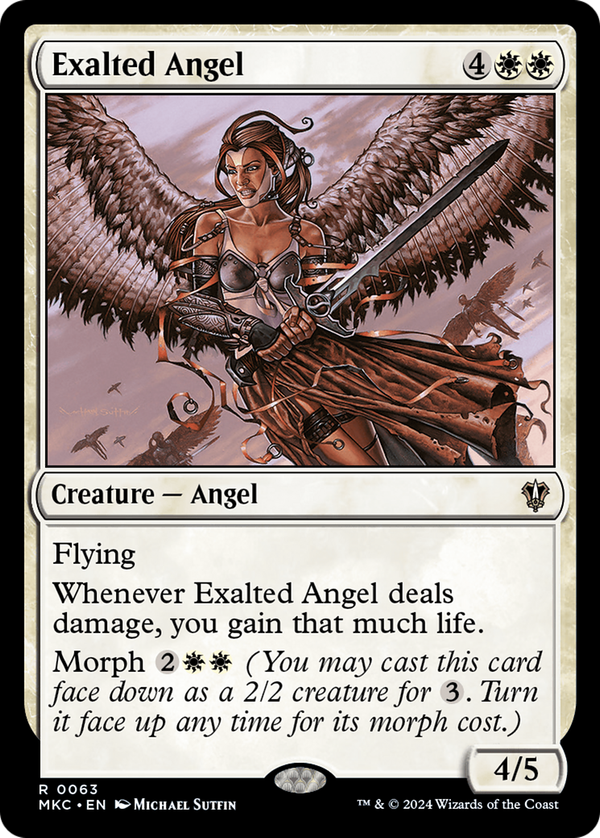
Rules text
 (You may cast this card face down as a 2/2 creature for
  . Turn it face up any time for its morph cost.)