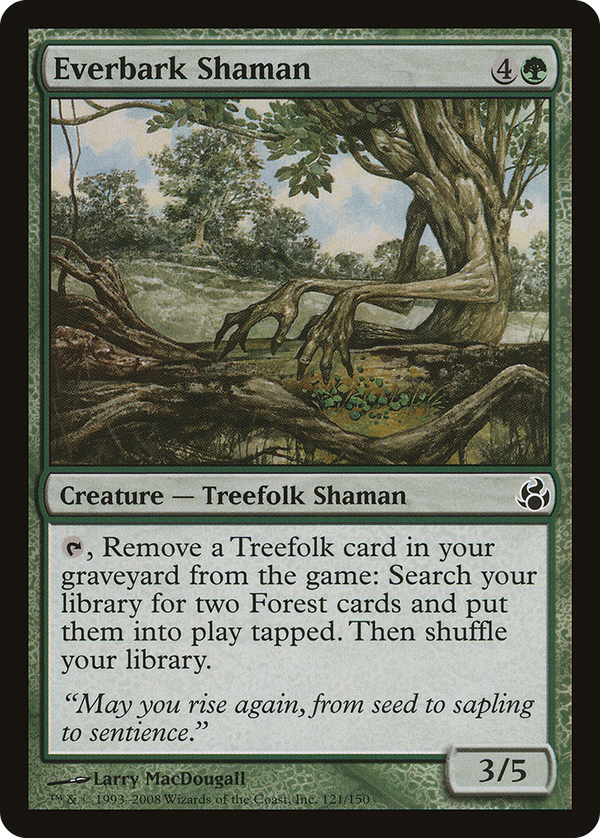
Everbark Shaman


The mana fixing here arrives as a graveyard-fueled engine rather than a one-shot fetch, and the cost structure is what roots it in a single archetype. Tapping to exile a Treefolk from the graveyard and pulling two Forests onto the battlefield tapped is a steep ramp output, but the resource it spends is the one a Treefolk deck overflows with: dead bodies clogging the yard after combat or sacrifice. That converts the graveyard from dead weight into a fuel tank, and rewards running a critical mass of the tribe. The Forests-onto-the-battlefield clause matters more than the raw card advantage: it sidesteps the land drop entirely, so the acceleration stacks on top of normal mana development rather than substituting for it. Two lands tapped per activation, gated only by available fodder, is a ramp ceiling few green permanents reach without a sacrifice or a payoff attached. The 3/5 body is built to keep the engine alive once it lands, soaking attacks and holding the ground while the yard refills between activations. The catch is the obvious one: with no Treefolk in the graveyard, the ability does nothing, which keeps the card out of generic ramp shells and inside dedicated tribal builds. It is a payoff disguised as fixing, where the tribe has to already be on the board and in the yard before the engine pays out a thing.
Rules text
 , Exile a Treefolk card from your graveyard: Search your library for up to two Forest cards, put them onto the battlefield tapped, then shuffle.