Etrata, the Silencer



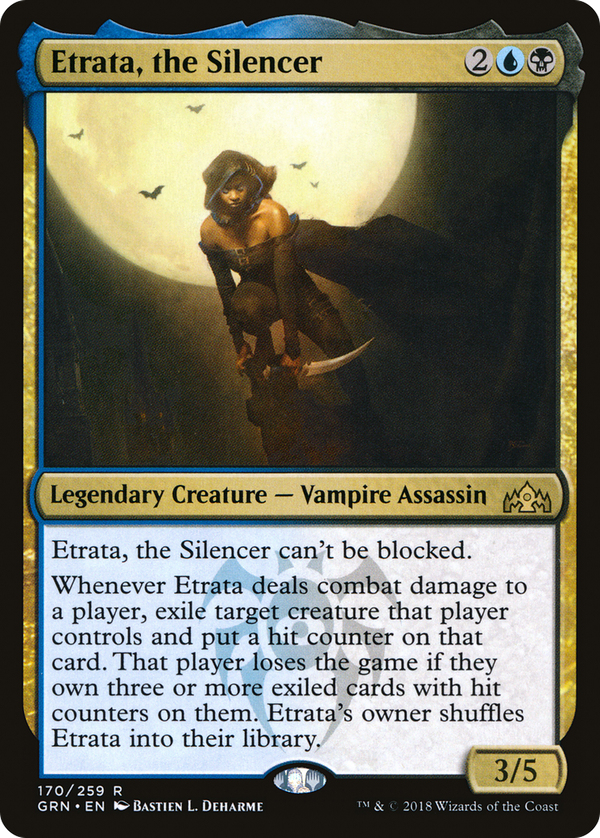
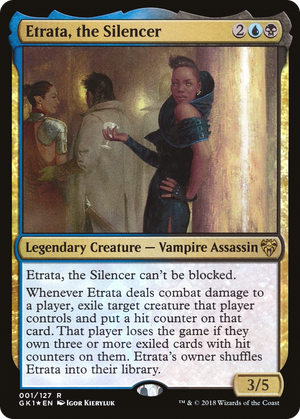
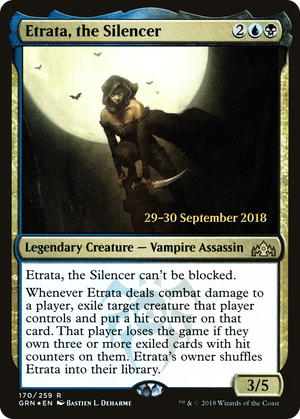
An alternate win condition built around a clock you have to land three separate times. Most "you lose the game" cards in blue-black resolve in a single payoff: assemble the engine, fire it once, the opponent is dead. This one demands repetition. Each connection exiles one of the defender's creatures with a hit counter, then shuffles the attacker back into its owner's library, so the assassin that just landed the hit disappears into the deck rather than staying on the board to do it again. The unblockable clause guarantees the damage arrives, but the self-shuffle is the price: three combat steps, three redraws of a four-mana body, three windows for the opponent to answer it before it reconnects. That tension is the entire design. A hard-stop win condition like this has to be slow and recurring rather than fast and lethal, or it would displace every other way to close a game. Crucially, the hit counters live on the exiled cards, not on Etrata herself, which means the progress banks: kill the body after a connection and the counters already placed stay placed, so the controller only needs to reassemble the attacker, not the accumulated tally. It is an assassin built to be interrupted and to keep coming back, an alternate-win engine whose whole premise is that you will lose the engine repeatedly and asks whether you can rebuild it three times before the opponent finds an answer that sticks.