Ether


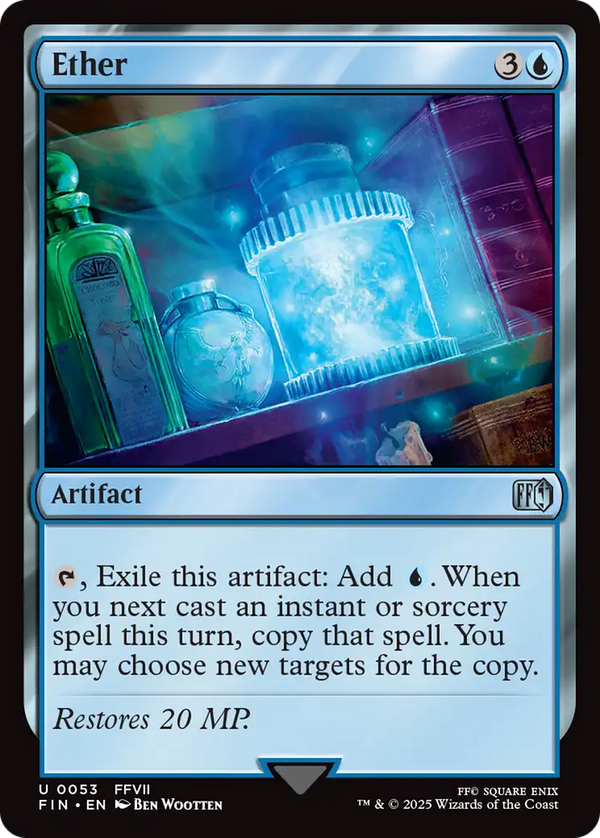
The trick here is that the mana and the copy arrive from the same activation, so the ritual pays for the very spell it doubles. Tap it, exile it, float a blue, and the next instant or sorcery you cast that turn resolves twice, with new targets available on the copy: any burn spell, any tutor, any counter, any bounce becomes two of itself for the cost of spending a stored artifact. The self-exile clause is what sets the terms. This is a one-shot resource, not a repeatable payoff, and that constraint is exactly what lets the effect be banked so cheaply. You cast the artifact and leave it parked on the board, cashing it out on a later turn when you finally have a spell worth doubling. The window is narrow and deliberate: the copy trigger watches only for your next instant or sorcery this turn, so you cannot float the blue now and hold the doubling for a future turn. The whole design lives in the gap between deployment and use. It sits on the battlefield as a promissory note, waiting for the correct spell, and the reward for holding it until then is steep. New targets on the copy let you split a doubled removal spell across two threats or point a doubled draw spell entirely at yourself. It is a copy effect shaped as a stored spell: banked early, spent when it matters most.
Rules text
 , Exile this artifact: Add . When you next cast an instant or sorcery spell this turn, copy that spell. You may choose new targets for the copy.