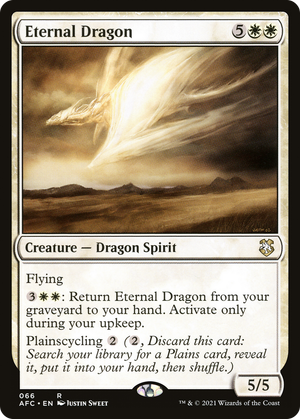
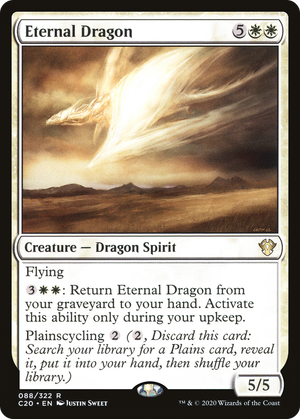
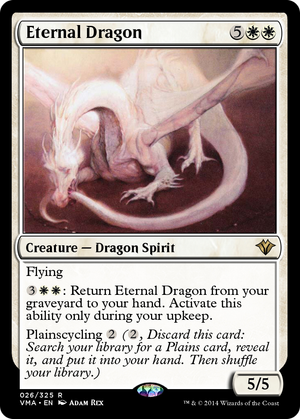
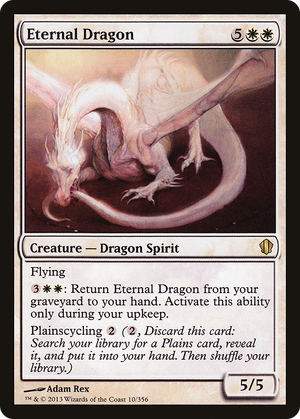
Eternal Dragon


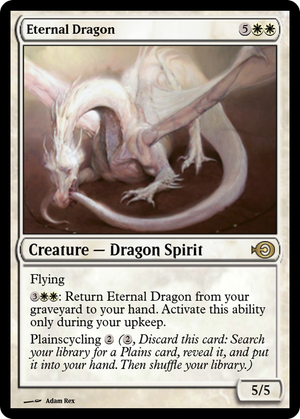
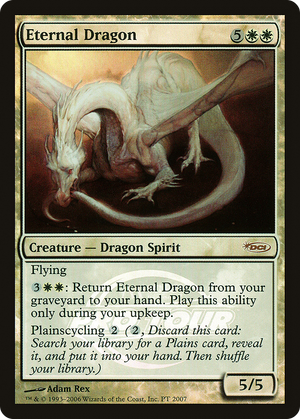
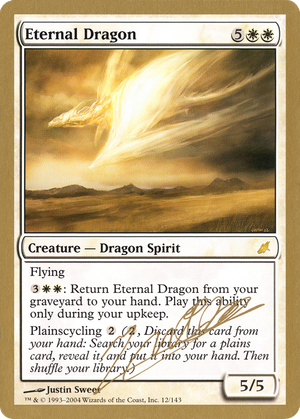
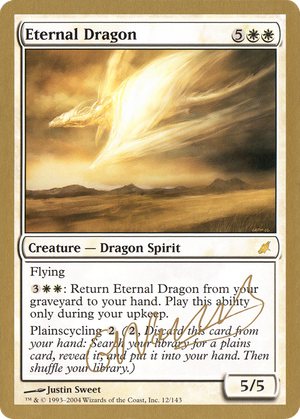
Plainscycling is the line that mattered, not the dragon. Land-fetching tucked onto a card you would otherwise never want to draw means this thing never costs you a deck slot: in the early turns it is a tutor for a Plains, and in the late game it is a 5/5 flier that walks back out of your graveyard during your upkeep. That graveyard-return clause is what closes the loop. Most fatties die once and stay dead, but the  ability brings this back to your hand (locked to your own upkeep, so an opponent cannot bait the activation on their turn), turning it into an attrition engine that grinds out control mirrors by refusing to run out of threats. The design tension being resolved is the perennial control-deck problem of the dead card in the opening hand: a finisher you can pitch for a land when you need land, then redeem for full value once the game goes long enough to matter. The flying body is almost incidental, a place to hang the toolbox rather than the reason to play it. What it represents is the recursive, land-smoothing top-end white control had been reaching for: a single card that fixes your mana, survives every sweeper you cast, and eventually wins through the air without ever asking you to spend a card you did not want to spend.
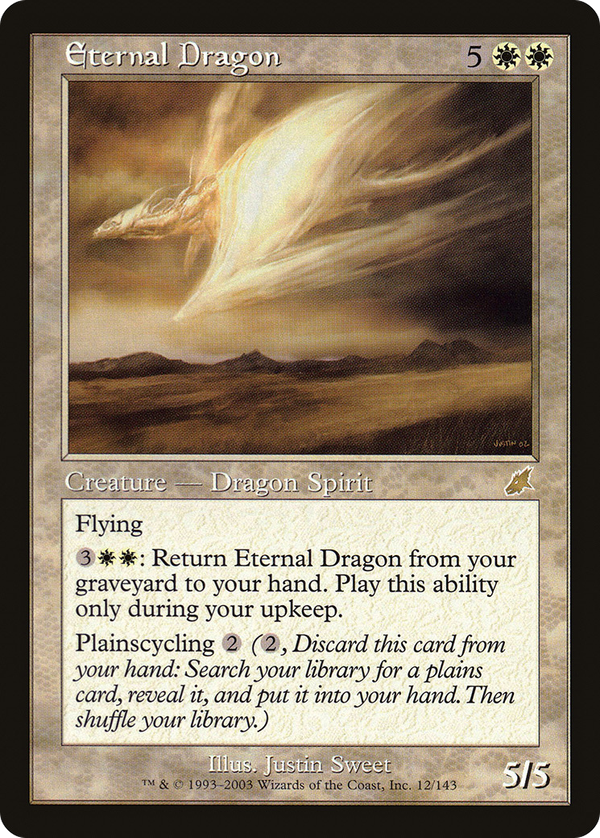
Rules text
: Return this card from your graveyard to your hand. Activate only during your upkeep.
Plainscycling  (, Discard this card: Search your library for a Plains card, reveal it, put it into your hand, then shuffle.)