Escape Protocol


The genius here is turning a resource-smoothing keyword into a repeatable flicker engine. Cycling was designed as the pressure valve, the thing you do when you don't need the card; this reroutes that same action into a trigger that blinks any artifact or creature you control at instant speed, for one mana each time. The two halves compound. Every cycler in your deck becomes a blink activation, and every enters-the-battlefield body becomes something you can re-trigger on demand, so long as you keep cards flowing through the cycle. What makes the pairing sharp is that both actions are cheap and card-neutral: cycling replaces itself, and the blink returns the permanent under its owner's control rather than exiling it away, so nothing is spent except the mana. The exile-and-return is immediate, not a delayed end-step reunion, which shapes what the instant-speed window actually buys you: you can dodge a targeted removal spell by blinking the creature in response (the spell fizzles for lack of a legal target), reset a summoning-sick attacker's abilities, or farm value off a Mulldrifter-style body during an opponent's end step. It will not save anything from a board wipe, though, since the permanent lands back on the battlefield before the wipe resolves. What it demands in return is a full commitment: nothing happens until both the enchantment is down and a stream of cyclers is in hand, a real deckbuilding tax rather than a splash. It rewards a specific engine shape: high cycling density feeding a payload of permanents worth flickering, with the enchantment as the hinge that makes the two lists talk to each other.
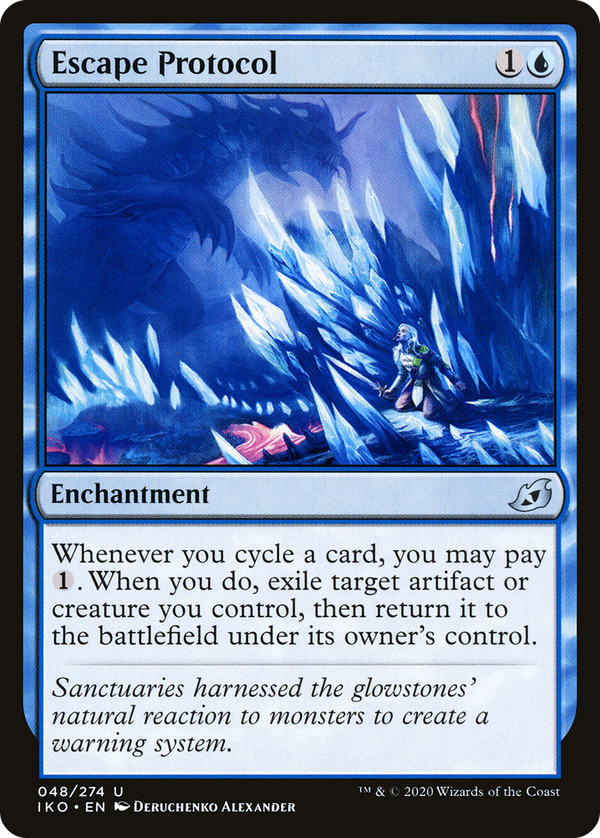
Rules text
. When you do, exile target artifact or creature you control, then return it to the battlefield under its owner's control.