Erosion

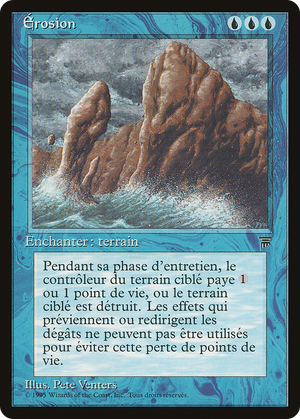
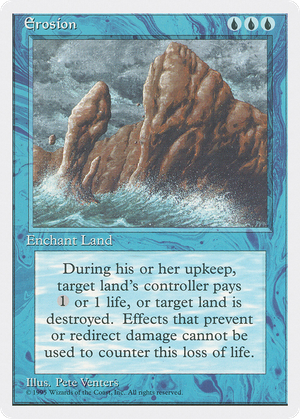
The triple-blue casting cost is the tell: this is a hate piece, not a tempo play, built to punish a manabase that has shorted blue while only the dedicated mono-blue deck can comfortably afford it. The destruction clause is a recurring tax rather than a guillotine: every upkeep, the land's controller pays a single mana or a single life, so the Aura functions less like Stone Rain and more like a slow bleed that compounds across a long game. In practice it asks an opponent to decide, turn after turn, whether the land is worth the upkeep. A deck under mana pressure will eventually let it go; a deck flush on resources shrugs and pays the toll. That conditional destruction is what keeps a one-card permanent answer from being a pure two-for-one: it only converts when the opponent runs out of slack. The color identity is the rest of the joke. The cost is a deliberately punishing on-color commitment, the kind of color-pie statement that let blue reach into land destruction only by demanding a mono-blue manabase so deep it doubled as a deckbuilding constraint. Erosion reads as a snapshot of when designers used heavy color requirements as the balancing lever, leaning on the difficulty of casting rather than the size of the effect.
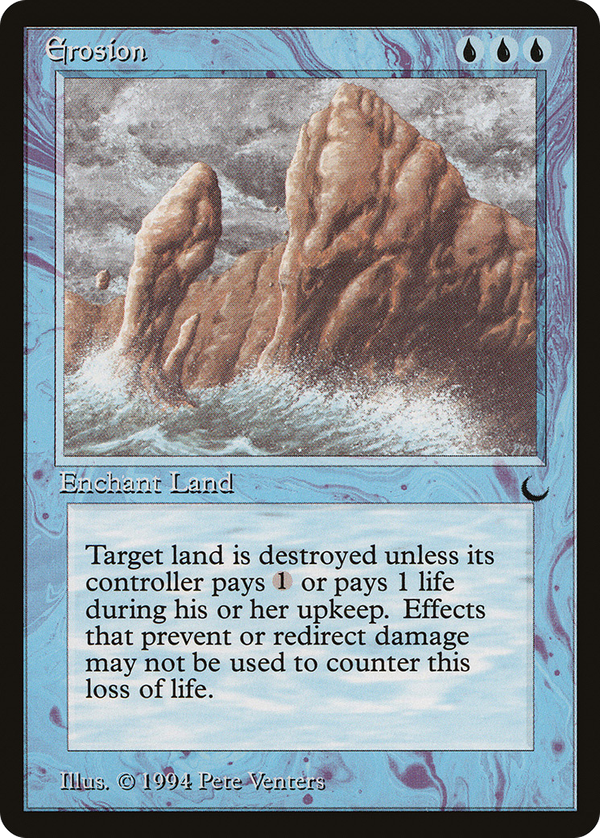
Rules text
 or 1 life.