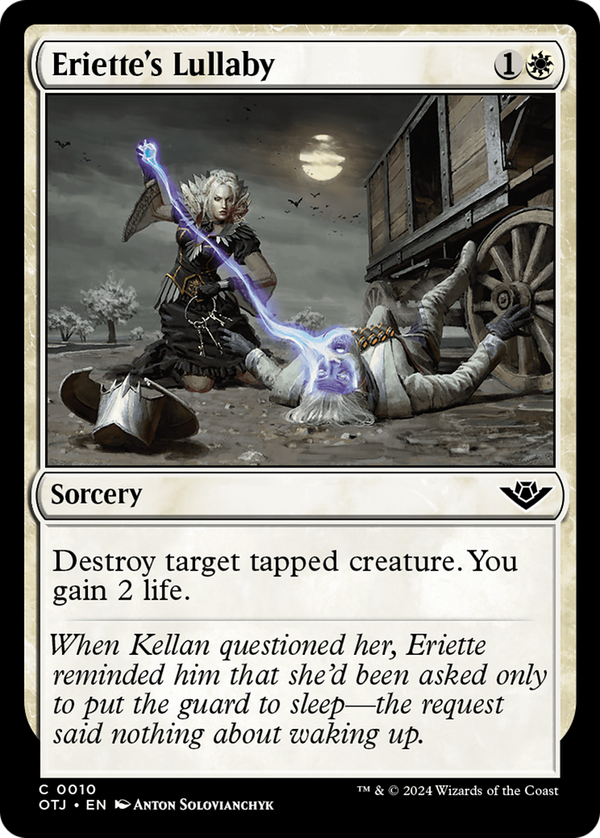
Eriette's Lullaby


The tapped-creature clause is the whole negotiation here. Unconditional destruction at two mana would be an obvious overshoot for white, so the design fences it behind a state the caster does not always control: the target has to be tapped, which usually means it has attacked or committed to an activated ability that requires tapping. That turns the spell into a reactive tool rather than proactive interaction. It punishes the aggressor who overextends and the mana dork or tapper who taps out, but it whiffs entirely against an untapped board sitting back on defense. White has leaned on this constraint for a long time to price down its removal (the lineage runs back through Reprisal and its cousins that only answer attackers), and the tapped requirement does similar structural work here while widening the net past pure combat: anything that taps to activate becomes fair game the moment it does. The two life is the sweetener that costs the designers almost nothing to hand a color whose identity already leans on incremental lifegain, and in a race it can swing the math more than the destruction itself. The real design tension is patience versus tempo: the spell is cheapest precisely when it is slowest, rewarding the player willing to hold it until the opponent has already tipped their hand instead of the one who wants to dictate the board on their own turn.