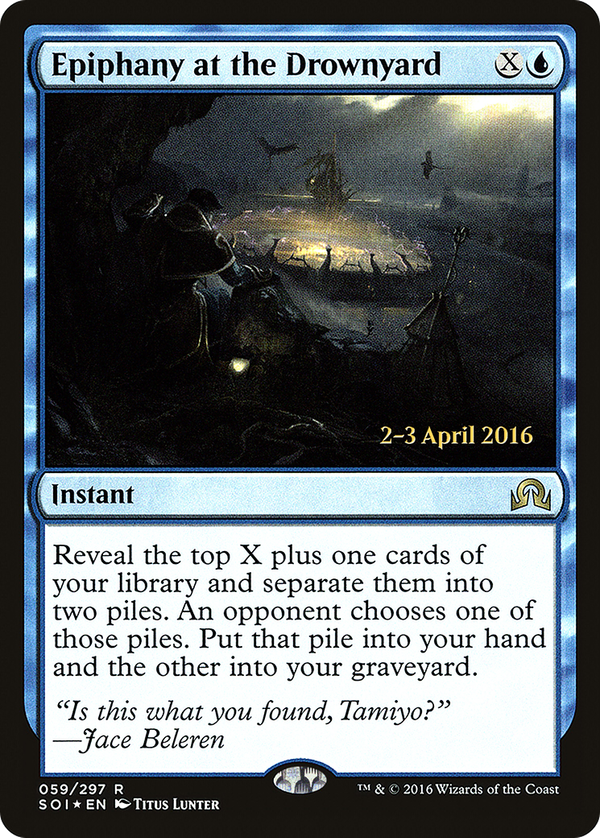
Epiphany at the Drownyard


Fact or Fiction, handed to the caster instead of the opponent. The core mechanic is the same pile-split: reveal cards, separate them into two groups, let your opponent assign which group goes where. The reversal is structural. In Fact or Fiction the opponent splits and you choose; here you split and the opponent chooses. That swap loads the entire burden onto you, the splitter: instead of reading an opponent's piles and picking the better one, you now have to construct two piles you would be content to keep either of, knowing a competent opponent will always hand you the one you valued least. The puzzle is no longer evaluation but partition, and it is a harder one, because there is no safe split when both halves have to be acceptable. The X in the cost lets the dig scale, so a late deployment reveals a deep stack and forces a pile assignment where even the denial pile has to be a draw you can live with. The two-mana floor at X equals one still buys a respectable instant-speed refill, but the card's ceiling is governed entirely by how good you are at building two stacks you cannot lose with. It punishes lazy or lopsided piles and rewards an honest read of which cards you can actually afford to surrender.