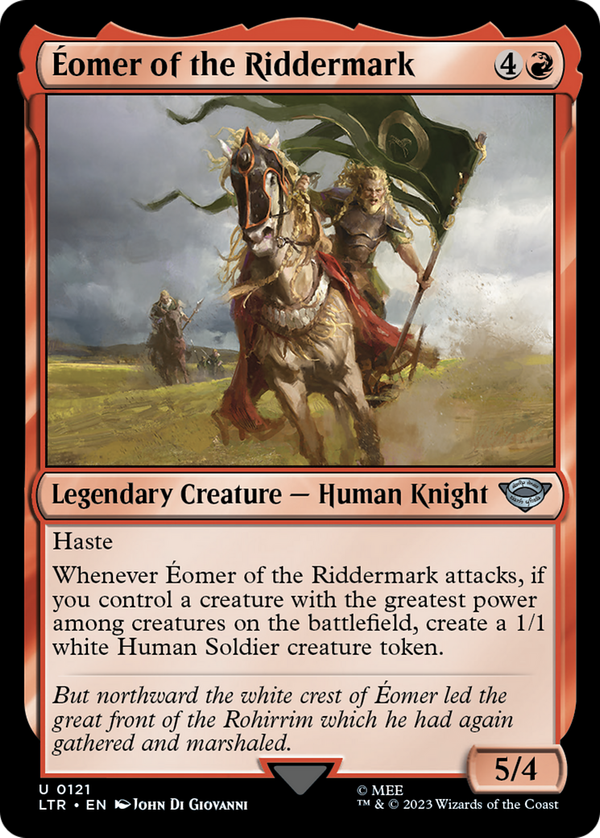
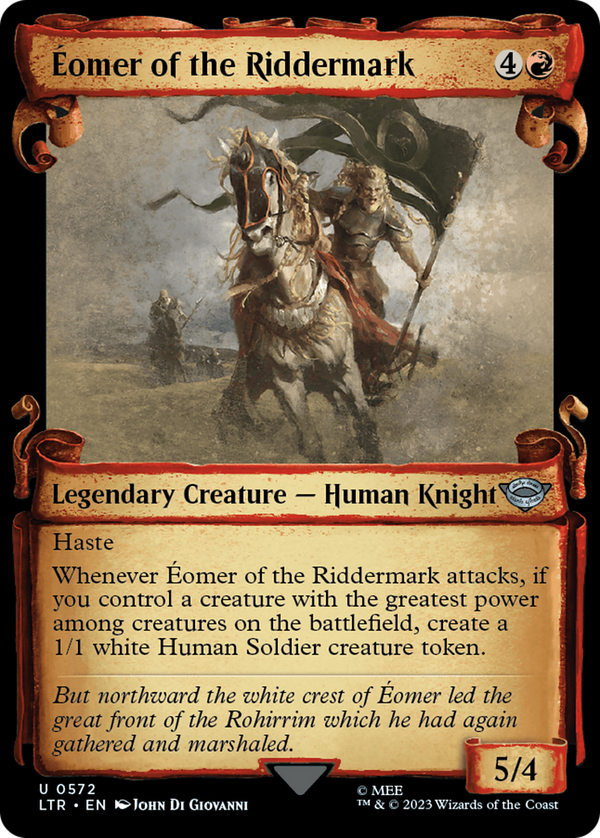
Éomer of the Riddermark

The token trigger reads like a straightforward go-wide payoff until you notice the condition it hangs on: the creature you control must have the greatest power on the battlefield, with ties in your favor. That single word rewires the card from a token engine into a board-state check. A 5/4 clears most early boards on its own, so the trigger tends to fire freely against aggressive decks whose creatures stay small; against a fatty on the other side, or an opponent's ramp payoff, the tokens simply stop. The design puts the payoff and the vulnerability on the same axis, which is more elegant than most attack-for-value bodies manage. Haste matters here beyond tempo: it means the check happens the turn he lands, before an opponent gets a window to deploy a larger blocker and switch the trigger off. The 1/1 he makes never threatens his own condition, since ties break your way and a small token cannot outsize its maker; if anything, a wider board of your own creatures only reinforces the line, because every creature that satisfies the check is one you control. What turns the ability off is always something on the other side of the table growing bigger than you. He is a knight built to be the biggest thing on the board and punished the moment he isn't, a sharper piece of tension than the plain go-wide framing suggests.