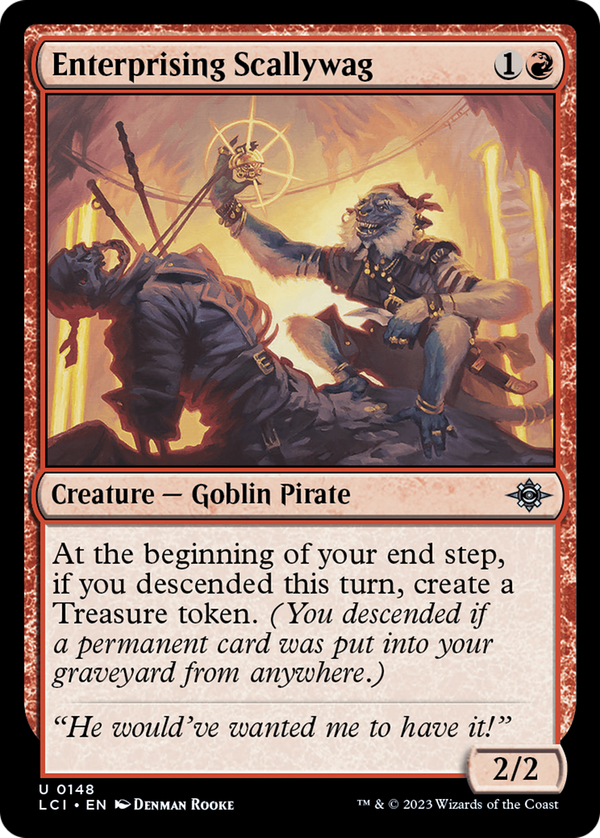
Enterprising Scallywag


The interesting thing here is what descend actually costs to satisfy. The condition is precise: a permanent card must be put into the graveyard, from anywhere. That excludes the tokens this Goblin Pirate itself makes (a Treasure sacrificed for mana leaves no card behind), which sharpens the deckbuilding question rather than blunting it. What counts is the ordinary friction of a graveyard-leaning red deck: cracking a fetch, discarding a spare land, chump-blocking with a creature, milling a permanent off the top. The trigger fires at your end step and checks the whole turn, not a single event, so you get the entire turn to arrange one qualifying card hitting the yard before the window closes. That end-step timing matters more than the Treasure it produces: it lets you leave the option open, decide late whether you have already descended, and squeeze in a discard or a sacrifice after combat resolves. The payoff is a recurring ritual on legs, a body that refills a Treasure most turns without demanding a dedicated engine slot. The condition is a per-turn switch, not a counter, so descending twice nets one Treasure, not two; there is no incentive to overfeed the graveyard to it. It is a two-drop built to make the graveyard-matters plan pay rent in mana rather than in raw cards, a subtler job than the aggressive Goblin frame suggests.