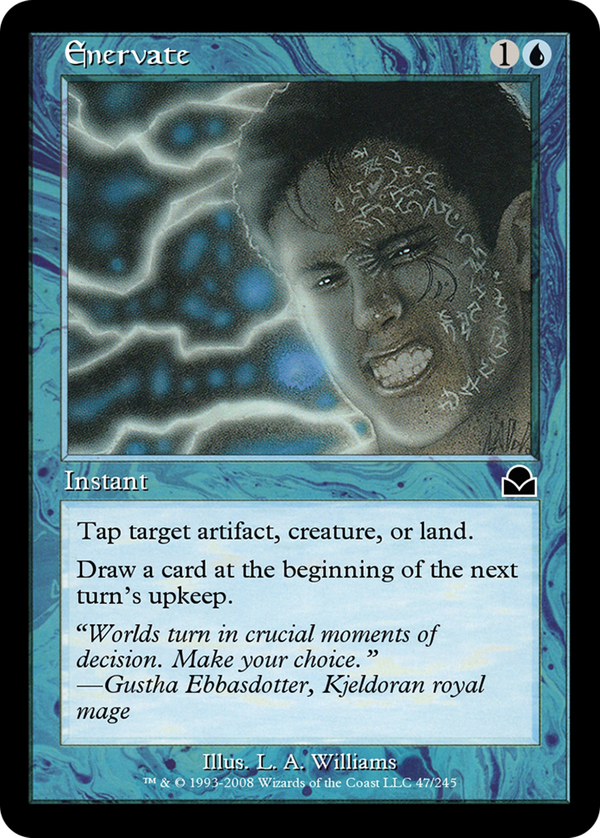
Enervate


A cantrip built around the most marginal effect in the game: tapping something. The Twiddle line (Twiddle itself can tap or untap, for free) was designed when tapping a permanent could plausibly matter, gumming up an opponent's blocker or denying a land for a turn, but the effect was always too small to spend a card on. Enervate's answer is to bolt a card draw onto it, with a deliberate delay: the replacement card does not arrive until the next turn's upkeep, so you cannot chain it into the same turn's play and you eat a full rotation of tempo loss before the cantrip pays you back. That lag is what keeps a two-mana "tap a thing, draw a card" from being a free trade. In practice the tap is rider, not reason; you cast this to cycle it and take the incidental upside of stalling an attacker, holding down a key blocker, or stranding a mana source for a turn. It documents an era when filtering came stapled to a tiny rules-text effect rather than offered clean, the way Brainstorm and later cantrips would eventually be priced. What lingers is the bargain it strikes: a near-dead ability subsidized into playability by a single delayed card, and the lesson Wizards took from it about how cheap a cantrip's "real" effect needs to be to justify the slot.