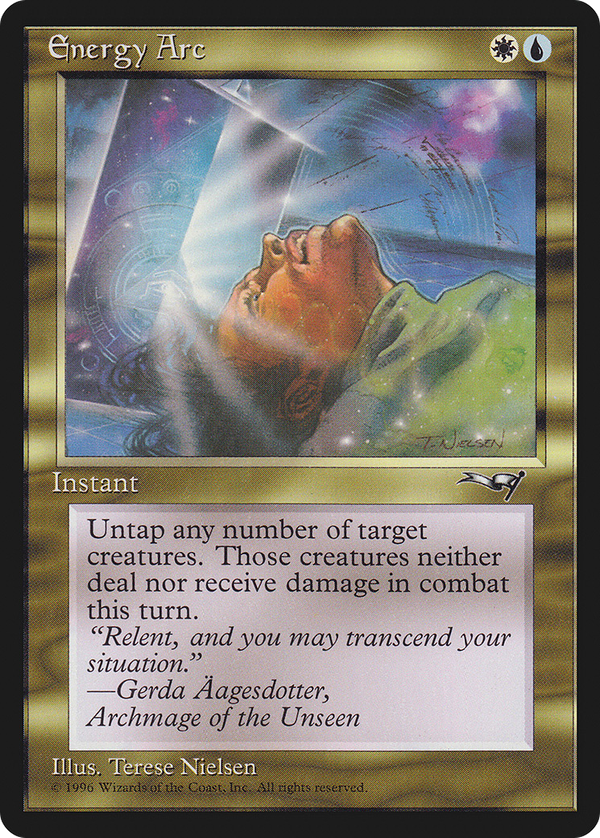
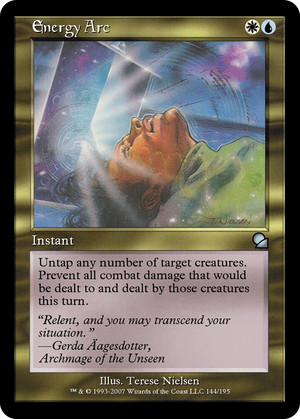
Energy Arc


A pitch-perfect example of how early Magic packed multiple instant-speed tricks into a single line of text and trusted the player to find the seams. The untap clause reads like a defensive tool (refresh blockers after they have already been declared), but the combat-damage prevention is the real lever: by naming your own attackers, you blank the entire combat step for those creatures, which means an attacker that is about to be chumped or eaten in a bad block walks away clean. The damage prevention is symmetric (it stops what those creatures deal as well as what they take), so the card is not a free combat win; it is a reset button that asks you to value the untap and the survival over the damage you give up. The untapped creatures are then available to block, which is the combat-trick-into-defense pivot that makes the two-mana rate honest. This fiddly, multi-axis design is exactly what the era leaned on heavily, and later sets gradually broke it apart into cleaner single-purpose cards, the way fog effects, untap effects, and damage-prevention effects each drifted into their own narrower templates. What lingers is the design philosophy: one card, several windows, all keyed to reading combat a step ahead of the opponent.