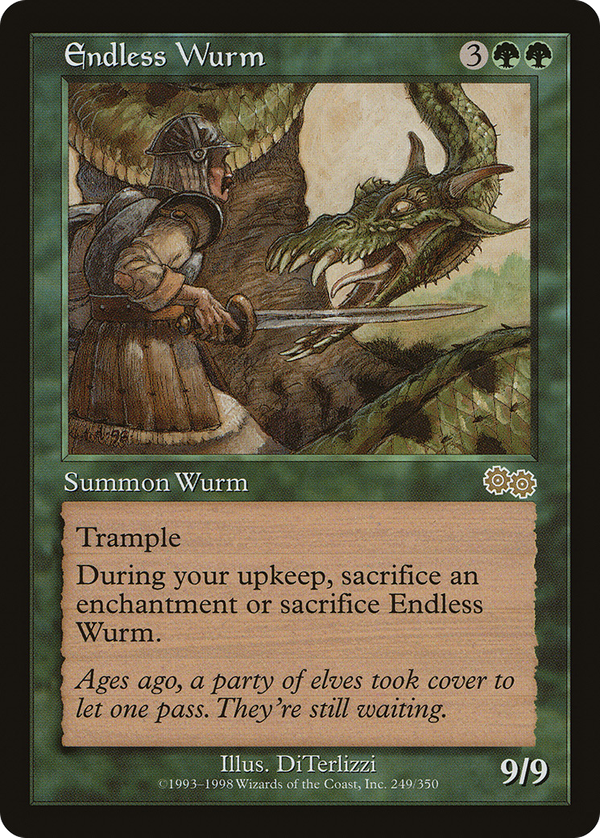
Endless Wurm


A 9/9 with trample for five mana was an absurd rate when this kind of body first appeared, and the price is paid every turn rather than once: each upkeep you sacrifice an enchantment or the Wurm devours itself. That is a genuine drawback dressed up as a deckbuilding prompt. The card only works if you have a renewable enchantment supply, and the elegant answer is an enchantment that comes back after you feed it to the trigger. The classic pairing is Rancor, which returns to your hand whenever it hits the graveyard: sacrifice it on upkeep, replay it for one green, and the payment becomes a recurring loop instead of a draining cost. Absent that kind of self-replacing aura, you are pitching real cards to keep a body alive, and the green decks of the era rarely had enchantments to spare. What makes the design read as honest is that the tax never goes away: there is no permanent fix, no way to shut the trigger off, only a bill you have to keep funding. The Wurm is a contract that comes due at the start of every one of your turns, and the whole archetype is built around owning something you actually want to lose and get back. A high-ceiling, high-maintenance creature from an era of green that specialized in exactly this: a body that outclasses anything fair, leashed to an upkeep tax sharp enough to keep it from being a freeroll.